
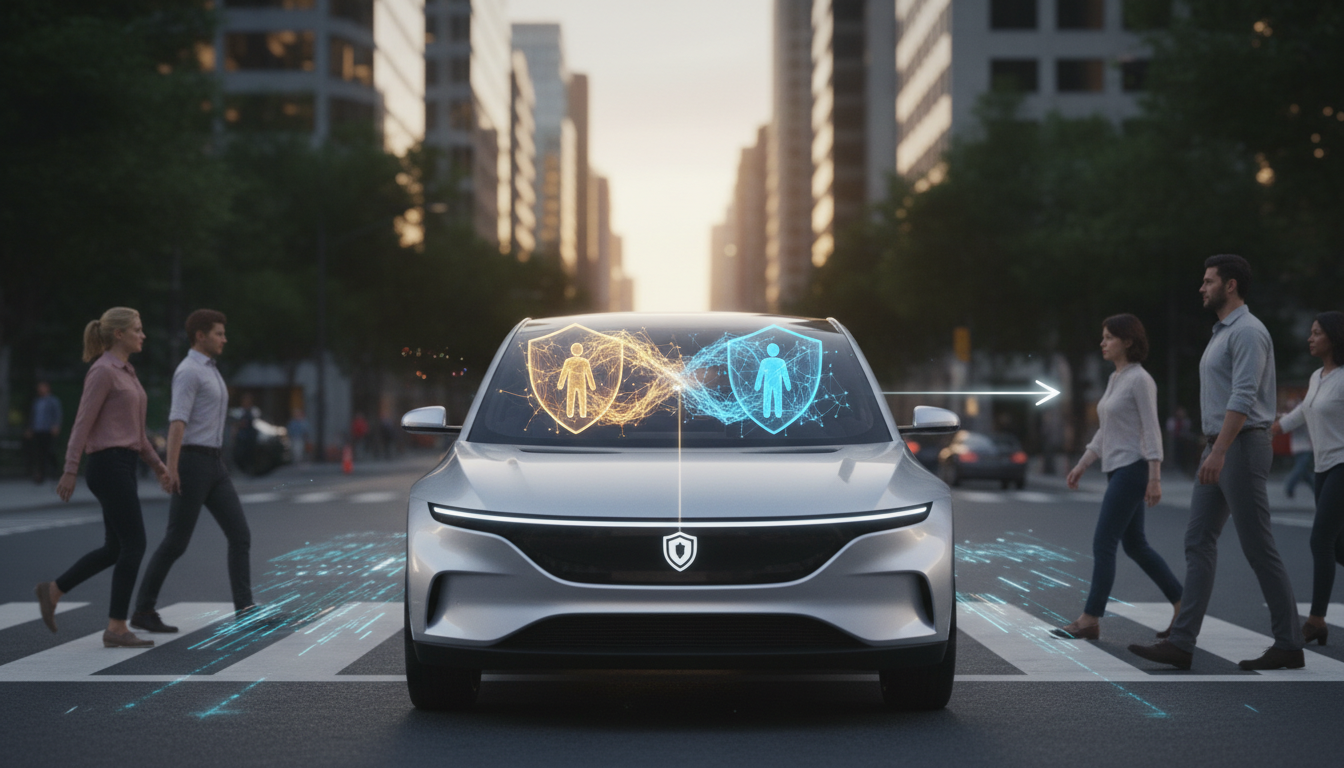
In the rapidly evolving landscape of artificial intelligence, autonomous vehicles stand as a testament to human ingenuity and technological prowess. As we navigate through 2026, the integration of AI-driven decision-making in self-driving cars raises profound ethical questions that demand our immediate attention. From my perspective, the core issue lies in balancing the efficiency of neural networks with the irreplaceable value of human life. This opinion piece argues that while AI advancements in autonomous vehicles promise unparalleled safety and convenience, we must enforce stricter ethical guidelines to prevent potential catastrophes.
The Rise of AI in Autonomous Driving
Autonomous vehicles, powered by sophisticated machine learning algorithms and neural networks, have transitioned from science fiction to everyday reality. Companies like Tesla and Waymo have deployed fleets that rely on deep learning models to interpret vast amounts of sensor data in real-time. These systems use convolutional neural networks (CNNs) for image recognition and reinforcement learning to make split-second decisions on the road. However, as someone deeply immersed in AI technology, I believe this progress, while impressive, glosses over the ethical minefields embedded in these algorithms.
Consider the foundational role of large language models (LLMs) and other AI components in enhancing vehicle autonomy. LLMs, for instance, could potentially aid in natural language processing for voice commands, but their application in decision-making scenarios introduces complexities. The primary concern is how these models prioritize actions when faced with ambiguous situations. In my view, the overemphasis on speed and efficiency in AI development often sidelines the human element, leading to designs that might not fully account for moral nuances.
Navigating Ethical Dilemmas in AI Decision-Making
One of the most debated ethical dilemmas in AI for autonomous vehicles is the "trolley problem" - a thought experiment where an AI must choose between two harmful outcomes. Should a self-driving car swerve to avoid hitting a pedestrian, potentially endangering its passengers? Or should it prioritize the lives inside the vehicle? As an AI enthusiast with a critical eye, I argue that current AI systems, trained on datasets that may not fully represent diverse real-world scenarios, are ill-equipped to handle such moral choices.
Machine learning models learn from historical data, which can inadvertently perpetuate biases. For example, if training data is skewed towards urban environments, rural or high-speed highway scenarios might lead to suboptimal decisions. In my opinion, this highlights a significant risk: the potential for AI to make choices based on cold calculations rather than ethical principles. We need to integrate ethical AI frameworks that incorporate values like fairness and transparency into the core of neural network architectures.
- Bias in Data Training: Neural networks trained on biased datasets could disproportionately affect certain demographics, such as underrepresented groups in traffic scenarios.
- Accountability Gaps: Who is responsible when an AI error leads to an accident - the manufacturer, the programmer, or the algorithm itself?
- Transparency Issues: The "black box" nature of complex AI models makes it difficult to audit decisions, eroding public trust.
To address these, I advocate for mandatory ethical audits of AI systems in autonomous vehicles. Regulatory bodies should require developers to simulate ethical dilemmas during testing phases, ensuring that algorithms align with societal values. This isn't about stifling innovation; it's about directing it responsibly.
The Risks of Unchecked AI Innovation in Vehicles
While the AI industry celebrates milestones in autonomous technology, the risks are mounting. Reports from 2026 indicate an uptick in AI-related incidents involving self-driving cars, underscoring the dangers of rapid deployment without adequate safeguards. From my standpoint, the allure of cutting-edge machine learning often overshadows the need for robust risk assessment.
Neural networks, although highly effective, can falter in edge cases - unpredictable weather, sudden obstacles, or cyber threats. A hacked AI system could manipulate vehicle decisions, leading to widespread security breaches. I believe that without proactive measures, such as advanced cybersecurity protocols integrated into LLMs and other AI components, we risk turning autonomous vehicles into liabilities rather than assets.
Moreover, the environmental impact of training these massive AI models, which requires enormous computational power, adds another layer of concern within the AI ecosystem. However, focusing back on ethics, the real peril lies in the dehumanization of decisions. AI doesn't feel empathy; it processes data. As an opinionated observer, I urge the industry to prioritize human-centric design, where algorithms are programmed to err on the side of caution, even if it means sacrificing a fraction of efficiency.
A Vision for Ethical AI in the Future
Looking ahead to the rest of 2026 and beyond, I envision a future where AI in autonomous vehicles is synonymous with ethical integrity. This requires collaboration between AI researchers, ethicists, and policymakers to develop standardized protocols for AI behavior. For instance, implementing explainable AI (XAI) techniques could demystify neural network decisions, allowing for better oversight.
In my view, the AI community must shift from a profit-driven model to one that emphasizes long-term societal benefits. This includes investing in diverse datasets for machine learning training and establishing international guidelines for AI ethics in transportation. By doing so, we can mitigate risks and harness the full potential of AI to save lives, reduce accidents, and enhance mobility.
Ultimately, the debate around AI ethics in autonomous vehicles isn't just about technology; it's about our values as a society. As we stand at this crossroads, let's choose a path that prioritizes human safety and moral accountability over unchecked algorithmic efficiency.
Conclusion: A Call to Action for the AI Industry
In conclusion, the integration of AI in autonomous vehicles presents both extraordinary opportunities and formidable ethical challenges. My opinion is clear: we must advocate for regulations that ensure AI systems are designed with empathy and foresight. By addressing these issues head-on, the AI industry can build a safer, more trustworthy future. It's time for stakeholders to act decisively, fostering an environment where innovation serves humanity, not the other way around.