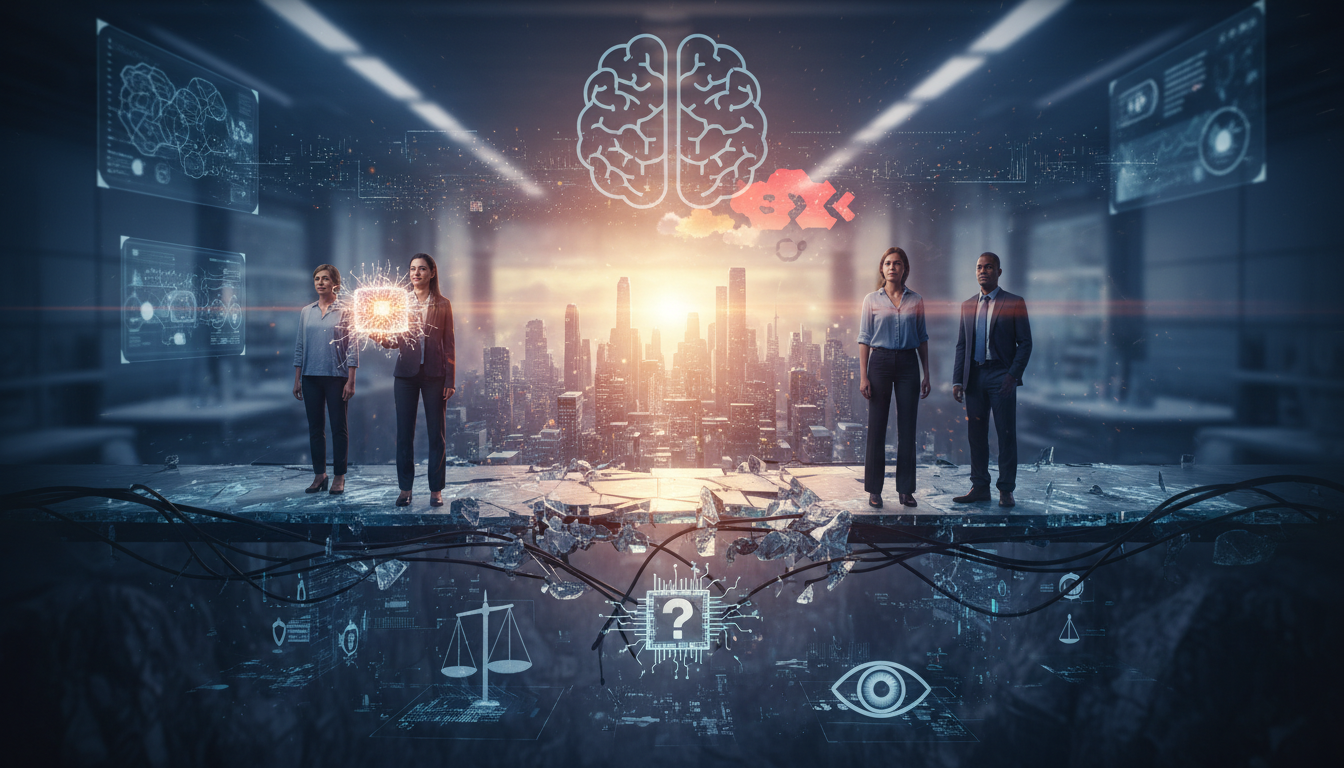

In the ever-evolving landscape of artificial intelligence, 2026 marks a pivotal year where innovation races ahead, but at what cost? As a proponent of AI's potential, I must admit that the unchecked expansion of neural networks and machine learning algorithms is raising red flags that demand immediate attention. This opinion piece argues that while AI drives unprecedented advancements, the absence of robust regulatory frameworks amplifies risks like algorithmic bias and unintended societal impacts, potentially undermining the very benefits we seek.
The Rapid Ascendancy of AI Technologies
Over the past decade, AI has transformed from a niche field into a cornerstone of modern technology. Neural networks, once confined to research labs, now power everything from recommendation systems to autonomous vehicles. In 2026, we're witnessing large language models (LLMs) that can generate human-like text and make decisions with startling accuracy. However, this progress isn't without its shadows. From my perspective, the sheer speed of development often overshadows the need for introspection. For instance, machine learning models trained on vast datasets can inadvertently perpetuate biases present in their training data, leading to discriminatory outcomes in hiring algorithms or facial recognition systems.
Consider the AI industry's growth metrics: global investment in AI reached trillions in recent years, fueling innovations that enhance productivity. Yet, as someone deeply immersed in this field, I see a pattern of over-enthusiasm. Companies rush to deploy LLMs without fully auditing for ethical pitfalls, such as the generation of misleading information that could influence public opinion. This isn't just a technical issue; it's a societal one. If we continue on this path, we risk eroding trust in AI technologies that could otherwise revolutionize healthcare and education.
The Ethical Debates and Inherent Risks
At the heart of the AI ethics debate is the question of control. Neural networks operate as black boxes, making decisions that humans can't always explain. In my view, this opacity is a ticking time bomb. For example, in financial sectors, machine learning models predict market trends, but errors can lead to massive economic disruptions. I've observed how AI systems, if not properly governed, exacerbate inequalities - such as when predictive policing tools disproportionately target certain demographics based on flawed data.
Moreover, the risks extend to security. As LLMs become more sophisticated, so do the threats of adversarial attacks, where malicious actors manipulate inputs to produce harmful outputs. This isn't hypothetical; real-world incidents in 2025 showed how AI-generated deepfakes influenced elections. From an opinion standpoint, the AI community must confront these dangers head-on. We can't afford to innovate in a vacuum. Regulatory bodies should mandate transparency standards, ensuring that developers disclose how models are trained and tested. Without such measures, we're essentially playing with fire.
To illustrate, let's break down key risks:
- Algorithmic Bias: Models trained on biased datasets reinforce stereotypes, affecting areas like employment and lending.
- Data Privacy Concerns: Machine learning relies on massive data troves, raising questions about user consent and protection against breaches.
- Job Displacement: While AI boosts efficiency, it can lead to widespread unemployment, necessitating retraining programs integrated into AI deployment strategies.
- Unintended Consequences: Neural networks might optimize for short-term gains, ignoring long-term societal harms, such as environmental impacts from energy-intensive training processes.
As an AI enthusiast, I believe these risks aren't reasons to halt progress but calls for balanced approaches. The debate often polarizes between technologists who prioritize speed and ethicists who emphasize caution, but true advancement lies in synthesis.
My Stance: Advocating for Proactive Regulation
In this opinion, I firmly advocate that stronger regulatory frameworks are essential to harness AI's benefits without succumbing to its perils. Governments and industry leaders must collaborate to establish international standards for AI development. For instance, mandating ethical audits for neural networks before public release could mitigate biases and enhance accountability. Drawing from current trends in 2026, initiatives like the Global AI Safety Alliance show promise, but they're voluntary and insufficient.
From my experience, self-regulation by tech giants has failed to address core issues. We need enforceable laws that require transparency in machine learning algorithms, similar to how financial regulations protect markets. This doesn't mean stifling innovation; rather, it's about guiding it responsibly. Imagine a world where AI assists in medical diagnostics without compromising patient privacy or where LLMs aid education without spreading misinformation. Achieving this requires a shift in mindset, where developers are incentivized to prioritize ethics alongside performance metrics.
Critics might argue that over-regulation could slow down breakthroughs, but I counter that the long-term gains outweigh short-term delays. By embedding ethical considerations into the AI lifecycle, we can foster trust and ensure that machine learning serves humanity, not the other way around.
Looking Ahead: A Call to Action
As we navigate 2026, the unchecked growth of AI presents both opportunities and warnings. In my final thoughts, I urge the AI community to embrace a more cautious, collaborative approach. By implementing stronger regulations, we can address the ethical debates and risks head-on, paving the way for a future where AI amplifies human capabilities without compromising our values. It's not about fearing technology; it's about steering it wisely for the greater good.