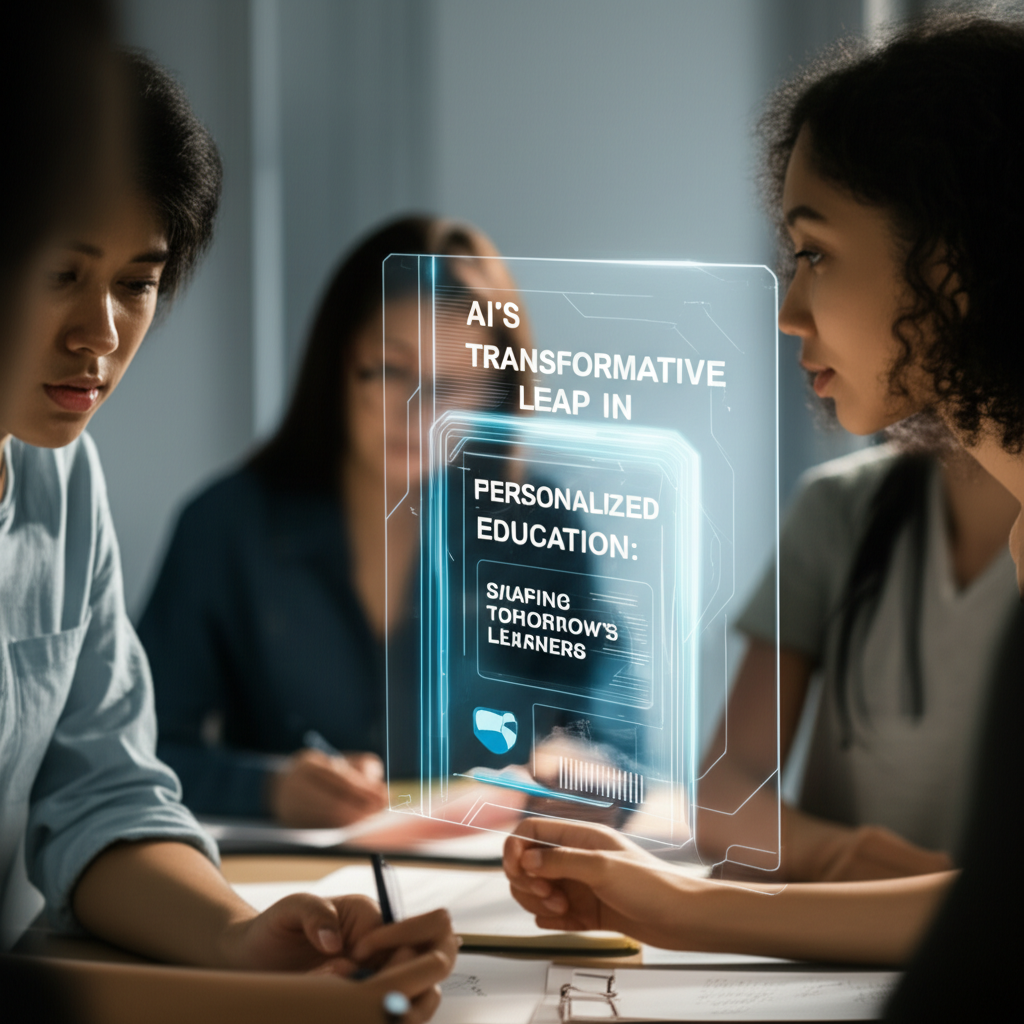
In the rapidly evolving landscape of 2026, artificial intelligence is no longer just a buzzword in tech circles; it's a game-changer in education. As we delve into how AI is revolutionizing personalized learning, we uncover a world where technology tailors educational experiences to individual needs, making learning more effective and accessible than ever before. This article explores the innovations, challenges, and future prospects of AI in education, drawing from recent advancements in large language models and AI tools that are reshaping how students engage with knowledge.
The Evolution of Education in the AI Era
Education has undergone significant transformations over the decades, from chalkboards to digital classrooms, but the integration of AI marks a pivotal shift. In 2026, AI-powered platforms are analyzing vast amounts of data to identify learning patterns, preferences, and gaps in real-time. For instance, adaptive learning software uses machine learning algorithms to adjust lesson difficulty based on a student's performance, ensuring that no child is left behind.
According to recent reports, the global edtech market has surged, with AI-driven tools accounting for a substantial portion of investments. These tools, built on breakthroughs from companies like OpenAI and emerging LLM technologies, offer interactive simulations and virtual tutors that provide immediate feedback. This evolution is not just about technology; it's about creating inclusive environments where diverse learning styles - visual, auditory, or kinesthetic - are catered to with precision.
Moreover, AI's role extends beyond individual learners. Schools and universities are implementing AI for administrative tasks, such as predictive analytics to forecast student dropout rates or optimize class schedules. As a result, educators can focus more on mentoring rather than managing, fostering a more human-centric approach to teaching.
How AI Personalizes the Learning Experience
At the core of AI's impact on education is its ability to deliver truly personalized learning paths. Unlike traditional one-size-fits-all curricula, AI systems leverage data from interactions to customize content, pacing, and assessments. For example, an AI tutor might recommend additional resources on algebra for a student struggling with equations while accelerating advanced topics for high achievers.
One key innovation is the use of natural language processing (NLP) in LLMs, which allows for conversational interfaces that make learning engaging. Students can ask questions in everyday language and receive explanations tailored to their comprehension level. This is particularly beneficial in language learning, where AI can simulate real-world conversations and provide cultural context, enhancing retention and practical application.
Furthermore, AI integrates gamification elements, turning lessons into interactive games that boost motivation. A study from early 2026 highlights that students using AI-personalized platforms showed a 30% improvement in engagement and retention rates compared to traditional methods. However, this personalization isn't without its tools; educators must ensure that algorithms are unbiased and inclusive, avoiding any reinforcement of existing inequalities.
- Real-time feedback mechanisms that help students correct mistakes instantly.
- Customized learning modules based on individual strengths and weaknesses.
- Integration with wearable tech for monitoring attention and emotional states during lessons.
- Collaborative AI tools that facilitate group projects with virtual team members.
Real-World Applications and Success Stories
Across the globe, AI in education is already making waves. In the United States, pilot programs in public schools have deployed AI assistants that help with homework and exam preparation, leading to higher test scores. For instance, a partnership between edtech startups and AI developers has resulted in apps that use generative AI to create personalized storybooks for young readers, adapting narratives to cultural backgrounds and interests.
In Asia, countries like South Korea and India are at the forefront, with AI-powered platforms scaling education in underserved areas. These systems deliver lessons via smartphones, overcoming barriers like teacher shortages. A notable breakthrough came from recent AI announcements, where new LLM models enable multilingual support, allowing students in remote villages to access quality education in their native languages.
Success stories abound: A 2026 case study from a European university showed that AI-enhanced courses reduced dropout rates by 25%. Additionally, vocational training programs are using AI simulations for hands-on experience in fields like engineering and healthcare, preparing a workforce for the demands of an AI-driven economy.
Challenges and Ethical Considerations
While the benefits are clear, integrating AI into education brings forth significant challenges. Privacy concerns top the list, as AI systems collect vast amounts of student data, raising questions about data security and potential misuse. In 2026, regulators are pushing for stricter guidelines to protect sensitive information, ensuring that AI tools comply with global standards like GDPR and emerging AI ethics frameworks.
Another issue is the digital divide. Not all students have access to the necessary devices or internet connectivity, which could exacerbate inequalities. Ethical considerations also include algorithmic bias; if AI systems are trained on skewed data, they might favor certain demographics, perpetuating discrimination. Educators and policymakers must address these by promoting equitable access and diverse datasets for AI training.
- Ensuring data privacy and obtaining parental consent for minors.
- Training teachers to effectively use and oversee AI tools.
- Developing regulations to prevent AI from replacing human interaction entirely.
- Addressing job displacement for traditional educators due to automation.
To mitigate these, collaborative efforts between governments, tech companies, and educational institutions are underway, focusing on ethical AI development that prioritizes human values.
The Future Outlook: AI's Lasting Impact on Education
Looking ahead, the future of education with AI is bright and full of potential. By 2030, experts predict that AI will be integral to every aspect of learning, from kindergarten to postgraduate studies. Emerging trends include AI-driven predictive analytics that help identify at-risk students early, and immersive virtual reality experiences that make history lessons feel alive.
Innovations in AI, such as advanced LLMs from ongoing research, will continue to refine personalization, making education more adaptive and efficient. However, this future depends on balanced implementation, where AI complements rather than replaces human teachers. As we move forward, the key will be fostering a symbiotic relationship between technology and pedagogy to create lifelong learners equipped for an ever-changing world.
In conclusion, AI's role in personalized education in 2026 represents a monumental step toward equitable and effective learning. By embracing these technologies responsibly, we can unlock the full potential of every student, paving the way for a more informed and innovative society.