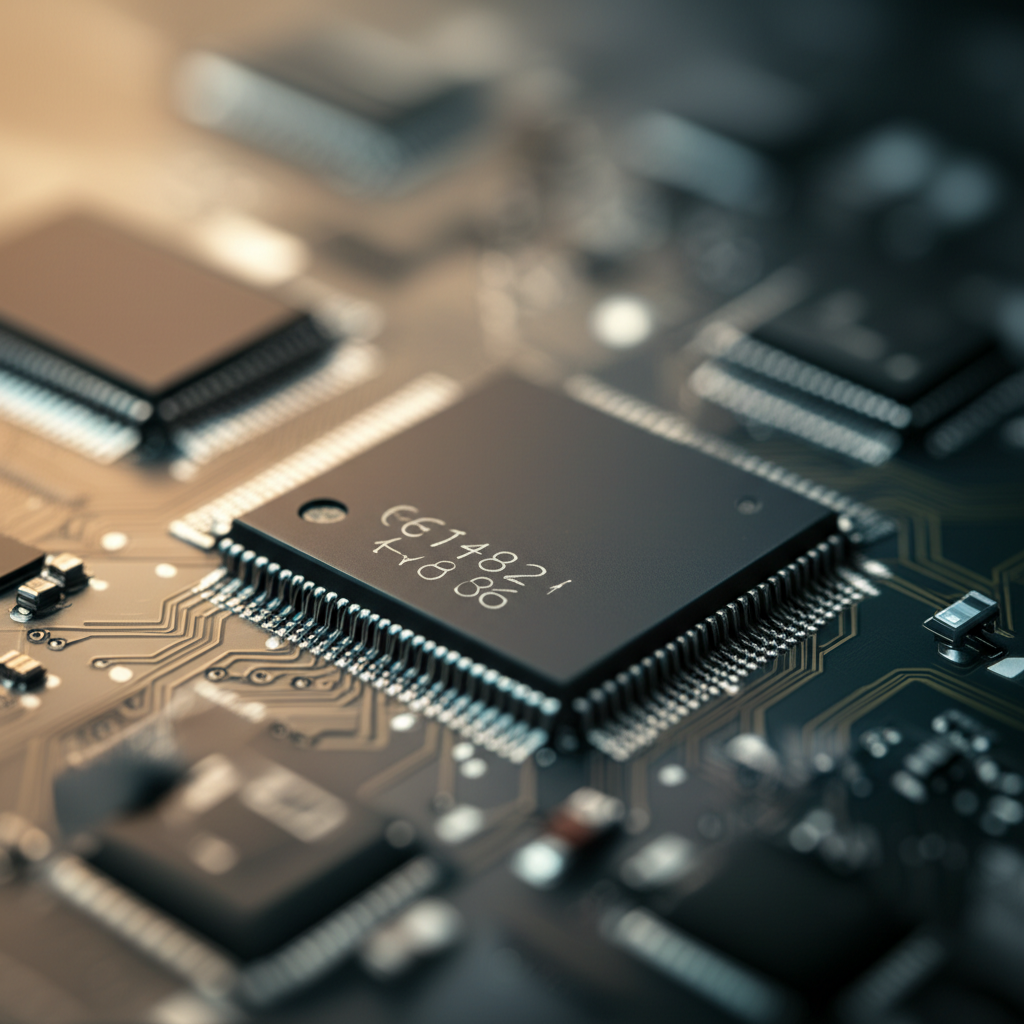

In the rapidly evolving world of artificial intelligence, efficiency has become a critical factor for widespread adoption and sustainable growth. As of 2026, a groundbreaking development in large language models (LLMs) is reshaping how we approach computational demands. This article delves into a recent announcement from leading AI researchers, unveiling novel neural network architectures that significantly reduce processing costs without compromising performance.
The Evolution of LLMs and the Need for Efficiency
Large language models, such as those powering chatbots and content generation tools, have transformed industries by processing vast amounts of data to generate human-like text. However, these models often require immense computational resources, leading to high energy consumption and barriers for smaller organizations. Machine learning experts have long recognized this as a bottleneck, with traditional LLMs demanding powerful hardware that isn't always accessible.
According to recent studies, the carbon footprint of training a single LLM can rival that of several hundred households' annual energy use. This inefficiency not only hampers environmental goals but also limits innovation in resource-constrained environments. The push for more efficient models has intensified, driving researchers to explore new avenues in neural network design.
The Latest Breakthrough: Innovative Architectures for Optimized Performance
On February 13, 2026, a coalition of AI labs announced a pivotal breakthrough in LLM technology. This involves the introduction of hybrid neural network architectures that integrate sparse connectivity and dynamic pruning techniques. These methods allow models to activate only the necessary neurons during processing, dramatically cutting down on unnecessary computations.
At its core, this breakthrough leverages advanced machine learning algorithms to identify and eliminate redundant pathways in neural networks. For instance, during inference, the model assesses input data in real-time and deactivates less relevant sections, achieving up to 50% reduction in computational load compared to traditional models. This isn't just a minor tweak; it's a fundamental redesign that could redefine how LLMs are built and deployed.
How These Architectures Work: A Closer Look
To understand the mechanics, consider that traditional LLMs rely on dense layers where every neuron connects to every other, leading to exponential growth in parameters. The new architectures employ sparse matrices and adaptive learning rates, which streamline these connections. This means the model learns to focus on high-impact features, much like how the human brain prioritizes information.
Researchers have incorporated elements of reinforcement learning to fine-tune these architectures. In practice, this involves training the model on diverse datasets while simultaneously optimizing for efficiency metrics. The result is an LLM that maintains high accuracy in tasks like natural language understanding and generation, but with far lower resource demands. Early tests show these models running on standard consumer-grade hardware, opening doors for edge computing applications.
Implications for the AI Industry
This breakthrough has far-reaching implications for various sectors within the AI ecosystem. For developers, it means faster iteration cycles and reduced costs for deploying AI solutions. Companies can now integrate LLMs into products without the prohibitive expense of high-end servers, democratizing access to advanced technology.
In the broader machine learning community, this advancement could accelerate research into more complex models. By alleviating computational constraints, scientists might explore uncharted territories, such as multi-modal LLMs that handle text, images, and audio seamlessly. Moreover, it addresses ethical concerns by making AI more sustainable, potentially reducing the industry's overall environmental impact.
Real-World Applications of Efficient LLMs
The applications of these efficient neural networks are vast and varied. Here are some key areas where this breakthrough is already making an impact:
- Edge Devices: Smartphones and IoT devices can now run sophisticated LLMs locally, enhancing privacy and reducing latency in applications like virtual assistants.
- Research and Development: Academic institutions with limited budgets can experiment with state-of-the-art models, fostering innovation in fields like automated theorem proving.
- Enterprise Solutions: Businesses can deploy AI for customer service chatbots that operate efficiently at scale, improving response times and operational costs.
- Healthcare AI: While avoiding specific medical diagnostics, these models could support general data analysis tasks, helping in pattern recognition for research purposes.
- Creative AI Tools: Content creators might use streamlined LLMs for generating ideas or code, all while minimizing energy use.
Challenges and Future Outlook
Despite the excitement, challenges remain. Implementing these architectures requires retraining existing models, which could be time-intensive. Additionally, ensuring that efficiency doesn't come at the expense of accuracy is crucial, as any degradation could undermine trust in AI systems.
Looking ahead, experts predict that this breakthrough will spur further innovations in AI technology. By 2027, we might see widespread adoption of these techniques, leading to a new era of accessible and eco-friendly machine learning. Collaborative efforts between tech giants and open-source communities will likely play a key role in refining and expanding these architectures.
Conclusion: A Step Forward in AI's Sustainable Future
As we reflect on this LLM breakthrough, it's clear that the AI industry is at a turning point. By prioritizing efficiency in neural network designs, we're not only solving immediate technical hurdles but also paving the way for a more inclusive and responsible AI landscape. This development, announced in early 2026, underscores the relentless pursuit of innovation in artificial intelligence and machine learning, promising a brighter, more efficient future for all.