
Artificial intelligence has come a long way in how it handles language, and vector embeddings are a big part of that story. These mathematical representations help machines understand words and their meanings in context, rather than just treating them as isolated tokens. In 2026, we're seeing new techniques that make embeddings even more useful, especially when combined with knowledge graphs and large language models.
How Vector Embeddings Work
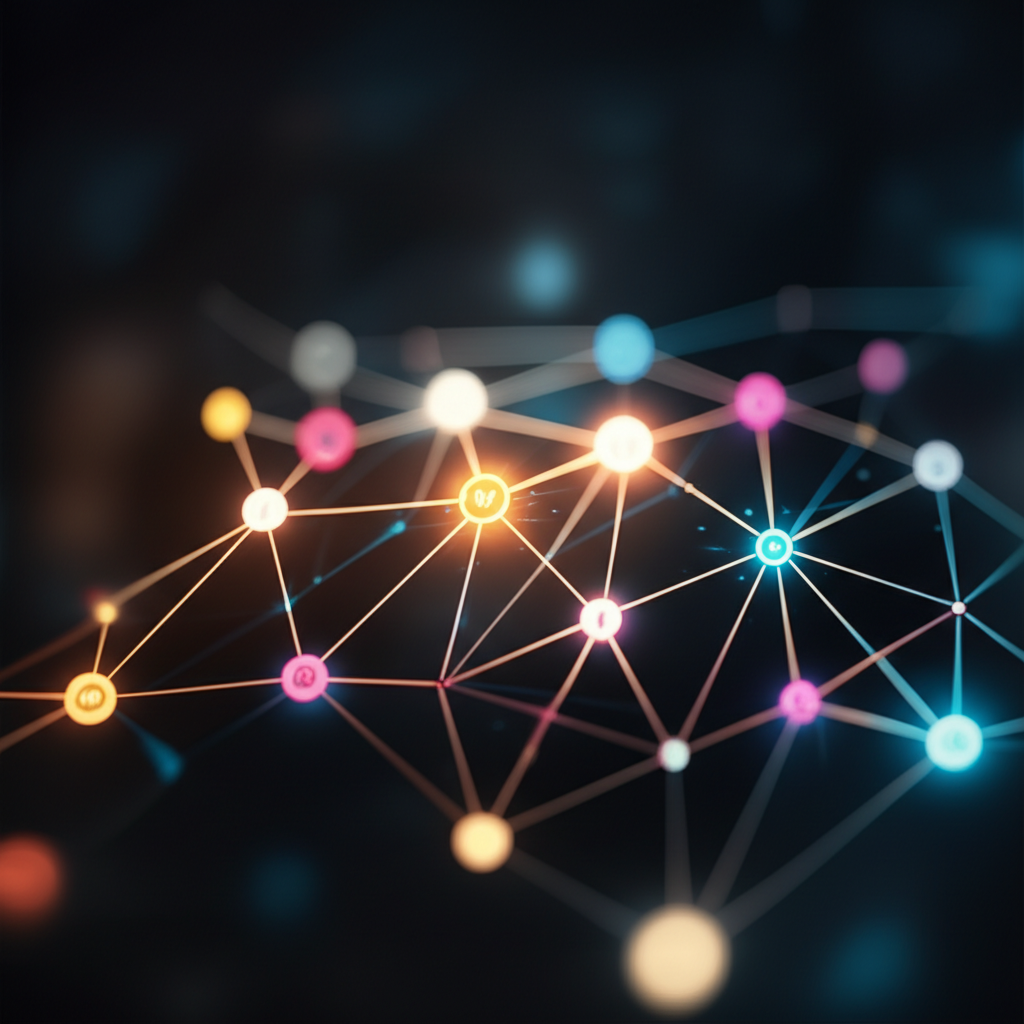
At their core, vector embeddings turn words, phrases, or sentences into lists of numbers—vectors—sitting in a high-dimensional space. The magic happens because similar concepts end up close together in this space. If you plot "king" and "queen" near each other, or "Paris" and "France," the math captures those relationships naturally.
Early methods like word2vec and GloVe showed this worked well. Now, researchers are adding feedback loops where the language model itself helps refine the embeddings over time. This means the system learns from actual usage, not just from a one-time training session. The result is embeddings that stay relevant without requiring expensive retraining.
What's New in 2026
This year brought several meaningful advances. One worth noting is hierarchical embeddings, which organize data in layers within knowledge graphs. This helps when you're trying to represent complex relationships—say, connecting a historical event to the people involved, the location, and the broader era all at once.
Some AI labs have also released embedding frameworks that combine text with images and audio. This multi-modal approach means a model can understand a photo and describe it in words, or analyze video content while reading the transcript. Previously, embeddings focused almost entirely on text, so this is a real expansion of what's possible.
There's also progress in making embeddings smaller and faster. Quantization reduces the precision of the numbers in a vector, which cuts down on memory and processing power. This matters because it lets companies run these systems on less expensive hardware—think edge devices or mobile phones—rather than always needing powerful servers.
Why Neural Networks Matter Here
Deep learning models, especially transformers, handle the heavy lifting behind modern embeddings. They process enormous datasets and find patterns that simpler methods miss. In 2026, attention mechanisms have gotten better at focusing on the most relevant parts of input data, which translates to more accurate embeddings overall.
Here's what these improvements actually look like in practice:
- Better context understanding: Embeddings can now tell the difference between "bank" (financial institution) and "bank" (river edge), even within long conversations.
- Handling scale: Systems can now work with billions of parameters, useful for enterprise applications with massive datasets.
- Cross-model compatibility: New formats let embeddings from different training systems work together, which helps companies mix and match tools.
- Built-in bias checks: Some newer embeddings include ways to detect and reduce unfair bias, though this remains an ongoing challenge.
Search systems benefit directly from this work. When you query an AI database, embeddings help match your words to the most relevant results by understanding what you actually mean, not just matching keywords.
Where This Shows Up
Companies using these advanced embeddings report measurable gains. One survey of AI teams found that adopting newer embedding techniques boosted model performance by about 25% on standard benchmarks. That's driven more investment in machine learning infrastructure, particularly in tools for generating and refining embeddings.
Beyond language, these embeddings help with clustering similar data points and improving classification accuracy. The same underlying technology that helps a chatbot sound more natural also helps recommendation engines figure out what you might want to watch or buy next.
What Still Needs Work
Computing good embeddings takes serious resources. Training on huge datasets requires expensive hardware and lots of energy. Researchers are exploring compression techniques and distributed systems to bring this within reach for smaller teams, but it's not solved yet.
There's also the question of what comes next. Some teams are looking at quantum-inspired algorithms for even faster processing, though that's still experimental. Others are focused on making embeddings work better across more languages and cultural contexts.
2026 Update
As of mid-2026, a major AI research group released an open-source toolkit for building hierarchical knowledge graph embeddings, which has already been adopted by several database companies. This signals a shift toward making these tools more accessible outside of large tech companies.
Overall, vector embeddings in 2026 are doing more than just improving language tasks—they're becoming infrastructure that connects different types of AI systems together. For anyone building with LLMs or knowledge graphs, understanding these changes matters practically, not just theoretically.