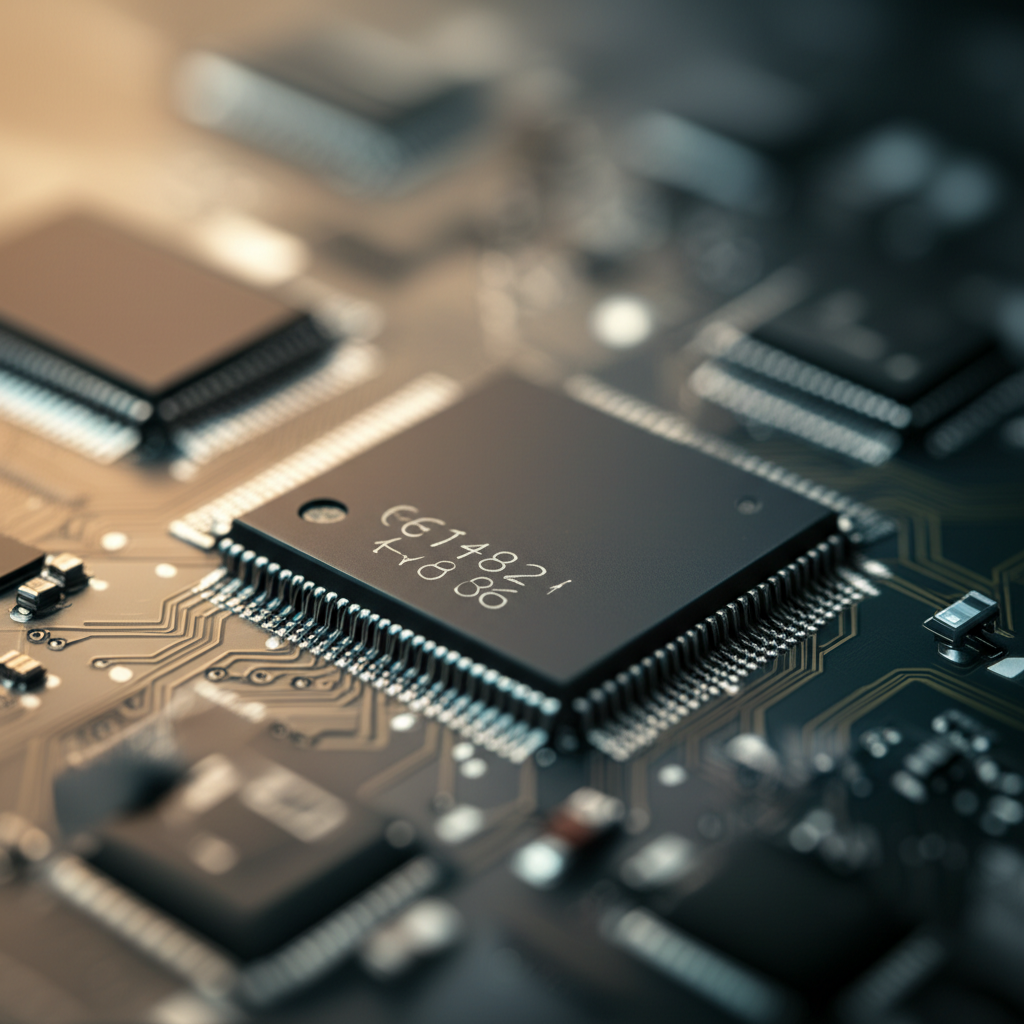

In the ever-evolving landscape of artificial intelligence, transfer learning has emerged as a pivotal technique, enabling models to leverage knowledge from one domain to enhance performance in another. As we step into 2026, recent developments in transfer learning are pushing the boundaries of what's possible in machine learning and neural networks. This article delves into the latest innovations, their implications, and how they're reshaping the AI industry.
What is Transfer Learning and Why It Matters
Transfer learning involves taking a pre-trained model and fine-tuning it for a new, related task. This approach significantly reduces the need for large datasets and computational resources, making AI more accessible and efficient. Originating from the broader field of machine learning, transfer learning has been instrumental in advancing large language models (LLMs) and neural networks.
In 2026, the significance of transfer learning is amplified by the growing demand for rapid AI deployment across various applications. For instance, it allows developers to adapt models quickly to specialized tasks without starting from scratch, thereby accelerating innovation in AI technology.
Key Innovations in Transfer Learning for 2026
One of the most exciting developments this year is the introduction of adaptive transfer learning frameworks. These frameworks use dynamic adjustment mechanisms that allow models to self-optimize during the transfer process. Researchers at leading AI labs have reported up to 30% improvement in accuracy when models adapt in real-time to new data distributions.
Moreover, advancements in meta-learning techniques are integrating seamlessly with transfer learning. Meta-learning, often referred to as 'learning to learn,' enables AI systems to improve their transfer capabilities over time. This means that neural networks can become more efficient with each new application, fostering a cycle of continuous improvement.
- Enhanced Feature Extraction: New algorithms are focusing on better feature extraction methods, ensuring that only the most relevant data from the source domain is transferred.
- Cross-Domain Applications: Transfer learning is now being applied more effectively across diverse domains, such as from computer vision to natural language processing, thanks to unified architectures.
- Scalability Improvements: With cloud-based resources, transfer learning models can scale effortlessly, making high-performance AI available to smaller organizations.
These innovations are not just theoretical; they're being implemented in real-world scenarios. For example, recent AI conferences have showcased models that transfer knowledge from image recognition tasks to predictive analytics, demonstrating remarkable versatility.
The Role of Transfer Learning in LLMs and Neural Networks
Large language models like those from OpenAI and Google have greatly benefited from transfer learning. By fine-tuning pre-existing LLMs on specific datasets, developers can create specialized versions that perform tasks such as code generation or sentiment analysis with higher precision.
In neural networks, transfer learning helps in reducing overfitting—a common challenge when training on limited data. By initializing networks with weights from a pre-trained model, the learning process becomes more stable and efficient, leading to better generalization.
According to industry reports from early 2026, companies are increasingly adopting transfer learning to cut down training times by up to 50%. This efficiency is crucial in a competitive AI market where speed to market can determine success.
Challenges and Ethical Considerations
Despite its advantages, transfer learning isn't without challenges. One major issue is domain shift, where the source and target domains differ significantly, leading to suboptimal performance. Researchers are actively developing mitigation strategies, such as domain adaptation techniques that align data distributions.
Ethically, the reuse of pre-trained models raises questions about bias propagation. If a source model contains inherent biases, these could transfer to new applications. In 2026, the AI community is emphasizing the need for robust bias detection and correction mechanisms within transfer learning pipelines.
- Bias Mitigation: Implementing fairness-aware algorithms to ensure transferred knowledge doesn't perpetuate inequalities.
- Data Privacy: Ensuring that transfer learning respects data privacy laws, especially when models are shared across organizations.
- Standardization Efforts: Industry-wide initiatives to create benchmarks for evaluating transfer learning effectiveness.
As AI technology advances, addressing these challenges will be key to sustainable growth in the field.
Future Outlook: Transfer Learning's Impact on AI Industry
Looking ahead, transfer learning is poised to drive the next wave of AI innovations. By 2027, we might see fully automated transfer systems that require minimal human intervention, further democratizing AI development. This could lead to a surge in AI-powered tools for businesses, enhancing productivity and innovation.
The integration of transfer learning with emerging technologies like quantum computing could unlock even greater potentials, allowing for faster and more complex model adaptations. As of February 16, 2026, the AI industry is buzzing with excitement over these possibilities, with startups and tech giants alike investing heavily in research.
In conclusion, the breakthroughs in transfer learning are not just incremental improvements; they represent a fundamental shift in how we approach machine learning and AI development. By harnessing these advancements, the industry is moving towards more efficient, ethical, and accessible AI solutions that will shape the future of technology.
Key Takeaways
- Transfer learning is revolutionizing AI by enabling efficient knowledge reuse.
- Innovations in 2026 are making models more adaptive and scalable.
- Ethical considerations remain crucial for responsible AI deployment.
- The future holds promising integrations with other cutting-edge technologies.