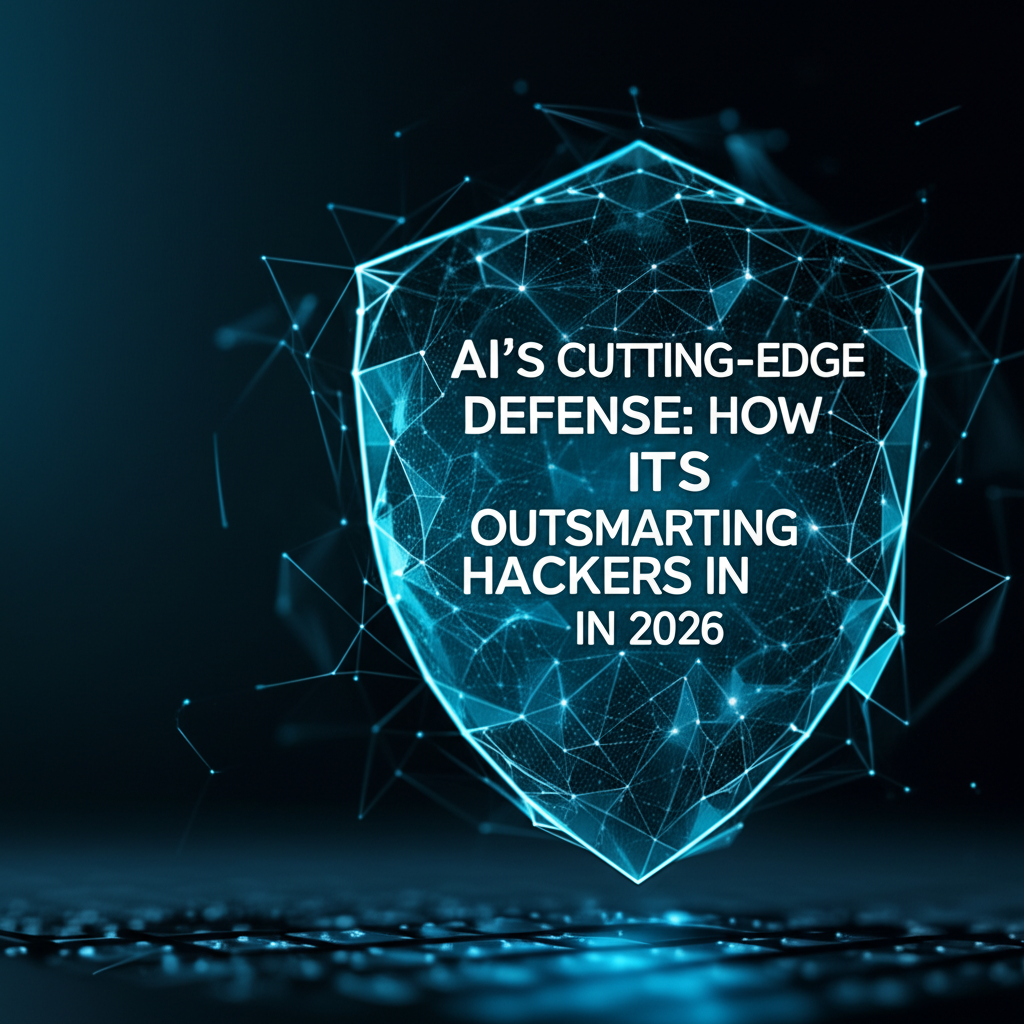
In the ever-evolving digital landscape of 2026, artificial intelligence (AI) has emerged as a formidable ally in the battle against cyber threats. As hackers become more sophisticated with advanced techniques like deepfakes and automated attacks, AI is stepping up to provide real-time protection that traditional methods simply can't match. This article explores the innovative ways AI is transforming cybersecurity, making our online world safer and more resilient.
The Rising Tide of Cyber Threats in 2026
The digital age has brought unprecedented connectivity, but it has also amplified the risks we face online. In 2026, cyber threats have evolved dramatically, with ransomware attacks increasing by 300% from the previous year, according to recent reports from cybersecurity firms. Hackers are now leveraging AI themselves to automate phishing campaigns and exploit vulnerabilities at lightning speed, making it nearly impossible for human defenders to keep up.
One of the most pressing issues is the proliferation of state-sponsored cyber warfare. Nations are using AI-powered tools to launch stealthy attacks on critical infrastructure, such as power grids and financial systems. For instance, a recent incident involved an AI-orchestrated breach that disrupted services for millions, highlighting the urgent need for advanced defensive strategies. As businesses and governments digitize more operations, the stakes have never been higher, underscoring why AI's role in cybersecurity is not just beneficial, but essential.
How AI Enhances Threat Detection
At the heart of AI's revolution in cybersecurity is its ability to analyze vast amounts of data in real time. Unlike traditional antivirus software that relies on predefined signatures, AI uses machine learning algorithms to detect anomalies and patterns that signal potential threats. This proactive approach allows for the identification of zero-day vulnerabilities - exploits that are unknown to developers - before they can cause damage.
For example, AI-driven systems can monitor network traffic and flag unusual behavior, such as a sudden spike in data exfiltration from a corporate server. Companies like Palo Alto Networks have integrated AI into their firewalls, resulting in a 40% reduction in breach incidents for their clients. By learning from past attacks, these systems continuously improve, adapting to new tactics employed by cybercriminals and providing a dynamic layer of defense that evolves alongside the threats.
Machine Learning and Predictive Analytics in Action
Machine learning, a subset of AI, is particularly effective in predictive analytics, allowing organizations to foresee and mitigate risks before they materialize. In 2026, tools powered by neural networks can simulate potential attack scenarios, helping security teams prepare for worst-case events. This predictive capability is akin to having a crystal ball for cyber defense, enabling preemptive strikes against emerging dangers.
Consider the use of natural language processing (NLP) in analyzing email communications to detect sophisticated phishing attempts. AI algorithms can discern subtle linguistic cues that humans might overlook, such as slight inconsistencies in wording or sender behavior. A study from MIT in 2025 showed that AI-based email filters blocked 95% of phishing emails, significantly reducing the human error factor that often leads to breaches. Furthermore, in the realm of endpoint security, AI monitors device behavior to prevent malware infections, ensuring that even remote workers are protected in our increasingly mobile workforce.
- Real-time anomaly detection for immediate threat response
- Automated patching of vulnerabilities without human intervention
- Behavioral analysis to identify insider threats
- Integration with cloud services for scalable protection
Real-World Applications and Success Stories
AI's impact on cybersecurity isn't just theoretical; it's being applied across various sectors with tangible results. In the financial industry, banks are using AI to safeguard transactions and customer data. For instance, JPMorgan Chase implemented an AI system that reduced fraud losses by 25% in 2025, by cross-referencing transaction data with global threat intelligence feeds. This level of precision has set a new standard for secure banking in 2026.
In healthcare, where data breaches can have life-threatening consequences, AI is protecting patient records and medical devices. Hospitals are deploying AI-powered intrusion detection systems that monitor IoT devices, such as pacemakers and insulin pumps, to prevent unauthorized access. A notable case involved a major hospital chain that thwarted a ransomware attack using AI, saving millions in potential downtime and preserving patient trust.
Government agencies are also benefiting, with AI enhancing national security efforts. The Department of Homeland Security has adopted AI for border cybersecurity, analyzing traffic patterns to detect cyber espionage. These applications demonstrate how AI is not only reactive but also instrumental in building robust, future-proof defenses.
Challenges and Ethical Considerations
Despite its advantages, the integration of AI into cybersecurity presents several challenges. One major concern is the potential for AI systems to be manipulated or "poisoned" with faulty data, leading to false positives or overlooked threats. Additionally, the reliance on AI raises questions about job displacement for human cybersecurity experts, as automation takes over routine tasks.
Ethical issues abound, particularly around privacy. AI's data-hungry nature means it processes vast amounts of personal information, sparking debates on data protection and consent. In 2026, regulations like the updated GDPR in Europe are pushing for greater transparency in AI decision-making processes. Balancing innovation with ethical standards is crucial to ensure that AI doesn't inadvertently create new vulnerabilities or exacerbate inequalities in access to cybersecurity resources.
- Addressing bias in AI algorithms to prevent discriminatory outcomes
- Ensuring robust data privacy through encryption and anonymization
- Training programs to upskill human workers alongside AI adoption
- International collaboration to standardize AI ethics in cybersecurity
The Future of AI in Cybersecurity
Looking ahead, the synergy between AI and cybersecurity promises even greater advancements. By 2027, experts predict that quantum AI could revolutionize encryption, making current hacking methods obsolete. As AI continues to mature, it will play a pivotal role in creating self-healing networks that automatically recover from attacks, minimizing downtime and enhancing overall resilience.
However, this future depends on ongoing investment in research and development, as well as fostering a collaborative ecosystem among tech companies, governments, and academia. The key to unlocking AI's full potential lies in addressing current limitations and promoting widespread adoption. As we navigate 2026 and beyond, AI's role in cybersecurity will undoubtedly be a defining factor in the security of our digital world.
In conclusion, AI is not just a tool but a game-changer in the fight against cyber threats. By embracing these technologies responsibly, we can build a safer online environment for everyone. Stay informed and proactive to leverage AI's capabilities in your own cybersecurity strategies.