
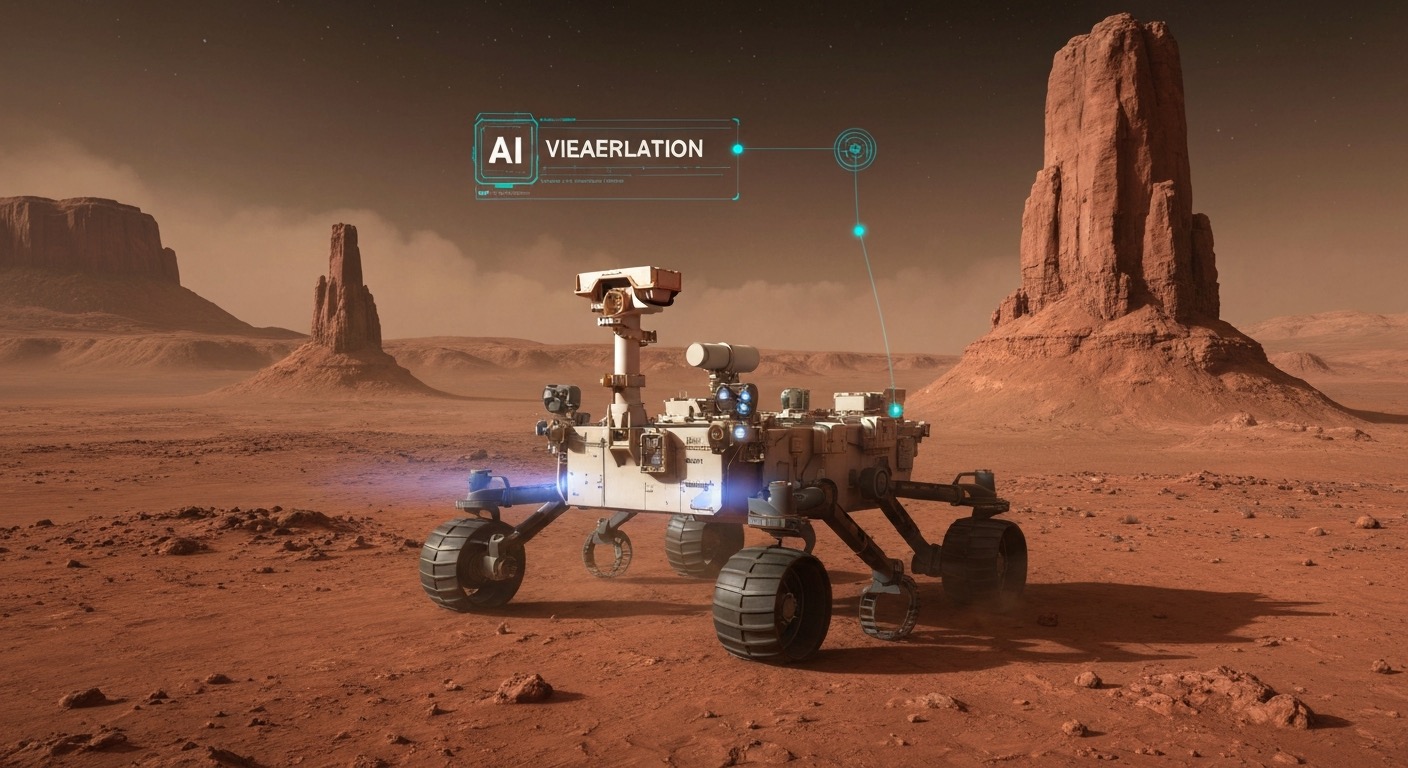
NASA's Perseverance Rover: Pioneering AI-Driven Exploration on Mars
Imagine a rover roaming the rugged, alien terrain of Mars, making split-second decisions on where to go next - without a human at the wheel. Sounds like something out of a sci-fi blockbuster, right? Well, NASA has turned this vision into reality with the Perseverance rover, which is now navigating the Red Planet using artificial intelligence. This isn’t just a small step for tech; it’s a giant leap for autonomous space exploration. Let’s dive into how Perseverance is rewriting the rules of interplanetary travel and what this means for the future of AI in space.
Breaking New Ground: AI Takes the Driver’s Seat
For years, navigating Mars rovers has been a painstaking process. Human operators on Earth analyze images and terrain data, plot a course, and send commands across millions of miles - often taking hours or even days due to communication delays. But Perseverance is changing the game. Equipped with a vision-capable AI system, the rover can now process images and terrain data in real-time, planning its own routes across the Martian landscape. This is no simple autopilot; it’s a sophisticated decision-making tool that identifies obstacles, assesses risks, and charts the safest, most efficient path forward.
What’s truly remarkable is how this shift reduces dependency on Earth-based control. With AI at the helm, Perseverance can cover more ground faster, making the most of its mission time. For AI and tech enthusiasts, this is a thrilling showcase of machine learning and computer vision working in one of the harshest environments imaginable.
How Does It Work? The Tech Behind the Autonomy
At the heart of Perseverance’s autonomous navigation is a powerful AI algorithm paired with high-resolution cameras and sensors. The rover captures images of its surroundings, and the AI analyzes these visuals alongside terrain data to map out potential hazards like rocks, craters, or steep slopes. Think of it as a self-driving car, but instead of dodging pedestrians, it’s avoiding Martian boulders. The system then generates a route, constantly updating its plan as new data comes in.
But here’s where it gets even cooler: this AI isn’t just following pre-programmed rules. It learns and adapts based on the unique challenges of Mars’ surface. This adaptability is crucial because Mars doesn’t come with a roadmap - every inch of terrain is uncharted territory. For tech geeks like us, this raises fascinating questions: How much more can AI evolve to handle even trickier scenarios? Could it one day make scientific decisions, like choosing which rock to sample, without human input?
Why This Matters: The Bigger Picture for Space Exploration
The implications of Perseverance’s AI-driven navigation go far beyond just one rover. First, it’s a proof of concept for autonomous exploration. If AI can handle the complexities of Mars, it could be applied to missions on other planets, moons, or even asteroids - places where communication delays are even more extreme. Imagine a fleet of rovers or drones exploring Europa or Titan, making real-time decisions without waiting for Earth’s go-ahead. That’s the kind of efficiency that could accelerate our understanding of the solar system.
Second, this breakthrough highlights the growing synergy between AI and space tech. We’re seeing AI not just as a tool, but as a partner in discovery. However, it’s worth pondering the risks. What if the AI misjudges a hazard and damages the rover? Or worse, misses a critical scientific opportunity? While the tech is impressive, it’s a reminder that human oversight still has a role - for now. Balancing autonomy with accountability will be a key challenge as we push these boundaries.
Looking Ahead: The Future of AI in Space
Perseverance’s success is just the beginning. NASA and other space agencies are already eyeing ways to integrate AI into future missions, from swarm robotics for planetary surveys to autonomous spacecraft that can repair themselves mid-flight. The potential is mind-boggling. Could we see AI systems designing entire mission plans one day, or even communicating with each other across space to coordinate efforts? For us tech enthusiasts, it’s an exciting time to speculate and dream big.
But let’s not get too far ahead of ourselves. Each step forward, like Perseverance’s autonomous drives, builds the foundation for those grander visions. What’s clear is that AI is no longer just a buzzword in space exploration - it’s a game-changer. As we watch Perseverance carve its own path across Mars, we’re witnessing the dawn of a new era where machines don’t just follow orders; they lead the way. So, what’s the next frontier for AI in space? Stick around - history is being made, one autonomous mile at a time.