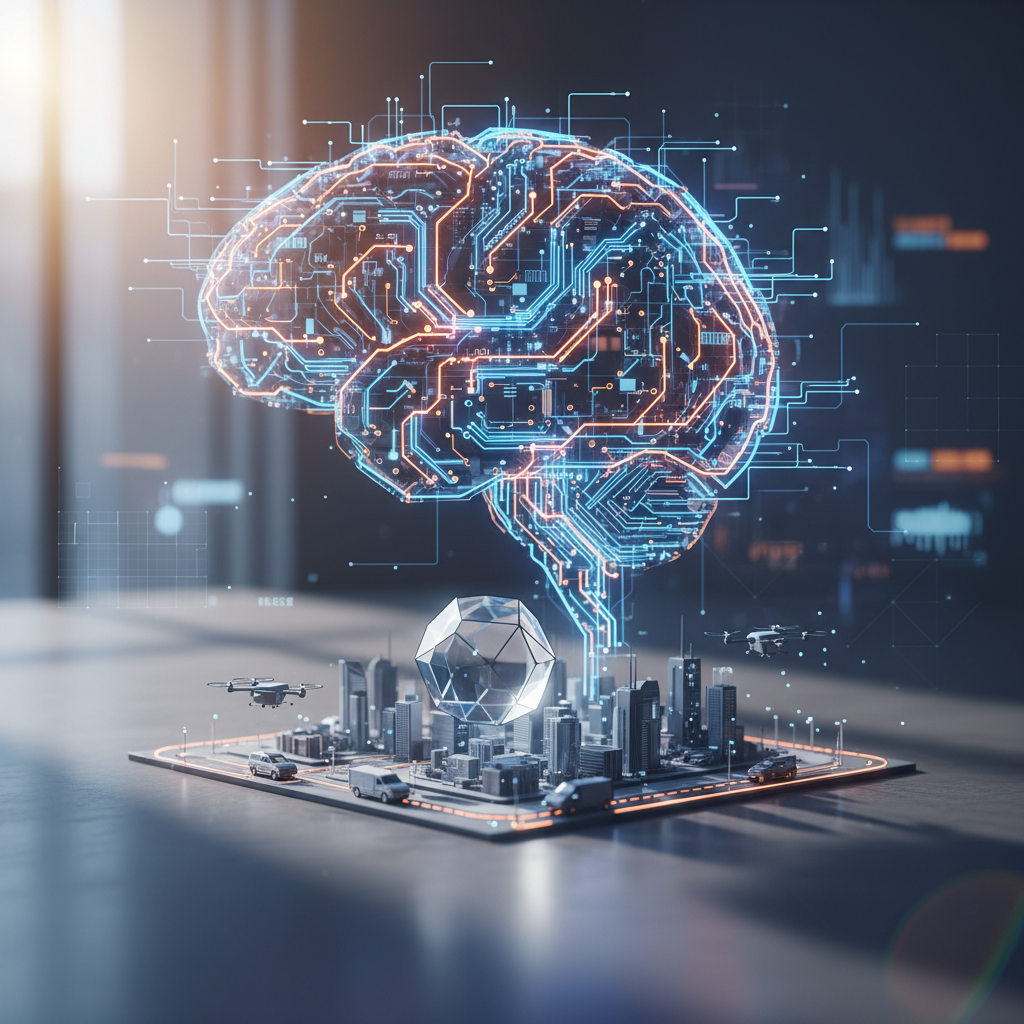

In a groundbreaking development for the field of artificial intelligence, researchers at the Global AI Research Institute (GARI) unveiled a new reinforcement learning (RL) algorithm on March 5, 2026, that promises to revolutionize autonomous systems. Dubbed 'Adaptive Reward Optimization Network' (ARON), this algorithm significantly improves the decision-making capabilities of AI-driven machines, paving the way for more efficient and adaptable autonomous vehicles, drones, and industrial robots.
What Makes ARON a Game-Changer?
Reinforcement learning, a subset of machine learning, focuses on training AI systems to make decisions by rewarding desired behaviors and penalizing undesired ones. While RL has been instrumental in advancements like self-driving cars and game-playing AI, traditional algorithms often struggle with scalability and adaptability in dynamic, real-world environments. ARON addresses these limitations with a novel approach to reward structuring and environmental modeling.
According to Dr. Elena Martinez, lead researcher at GARI, 'ARON dynamically adjusts its reward framework based on real-time environmental feedback, allowing autonomous systems to learn faster and perform better in unpredictable scenarios.' This adaptability could be a critical step forward for industries relying on AI for mission-critical operations.
Key Innovations Behind ARON
The development of ARON introduces several cutting-edge features that distinguish it from existing RL algorithms:
- Dynamic Reward Scaling: Unlike static reward systems, ARON recalibrates rewards based on situational complexity, ensuring optimal learning even in high-stakes environments.
- Multi-Agent Collaboration: ARON enables multiple autonomous agents to share learned strategies, fostering collaborative problem-solving in tasks like traffic management or warehouse logistics.
- Energy Efficiency: By optimizing decision pathways, ARON reduces computational overhead, making it ideal for edge devices with limited processing power.
These innovations position ARON as a potential cornerstone for the next generation of autonomous technologies, with applications ranging from urban mobility to disaster response systems.
Real-World Implications of ARON
The announcement of ARON comes at a time when the demand for reliable autonomous systems is surging. In the automotive sector, self-driving cars equipped with ARON could navigate complex urban environments with unprecedented precision, reducing accident rates and improving traffic flow. Similarly, in logistics, drones and robotic delivery systems could optimize routes in real-time, cutting costs and delivery times.
Beyond commercial applications, ARON's ability to adapt to unpredictable conditions makes it a valuable asset for emergency response. Imagine drones equipped with ARON rapidly mapping disaster zones, identifying survivors, and coordinating rescue efforts without human intervention. Such capabilities could save countless lives in scenarios where every second counts.
Industry leaders are already taking notice. Tech giant NeuroSphere announced plans to integrate ARON into its autonomous fleet management platform by late 2026, signaling strong confidence in the algorithm's potential. 'This is not just an incremental improvement; it's a paradigm shift in how autonomous systems learn and operate,' said NeuroSphere CEO Rajesh Kapoor during a press conference.
Challenges and Future Directions
Despite the excitement surrounding ARON, challenges remain. One key concern is the ethical implications of deploying highly autonomous systems in public spaces. If an ARON-powered vehicle makes a split-second decision in a life-or-death situation, who bears responsibility for the outcome? Researchers at GARI acknowledge these concerns and are collaborating with policymakers to establish guidelines for safe implementation.
Additionally, while ARON's energy efficiency is a significant advantage, scaling the algorithm to handle extremely large datasets—such as those required for global logistics networks—will require further optimization. Dr. Martinez noted that the team is already working on a second iteration of ARON, which will incorporate advanced neural network compression techniques to tackle this issue.
Looking ahead, the future of reinforcement learning appears brighter than ever. With ARON setting a new benchmark, we can expect accelerated innovation in autonomous systems over the next few years. From smarter cities to more resilient supply chains, the ripple effects of this breakthrough will likely be felt across multiple sectors.
Why This Matters for AI Enthusiasts and Professionals
For those immersed in the AI and machine learning community, ARON represents more than just a technical achievement; it’s a reminder of how far the field has come and how much potential remains untapped. Reinforcement learning, once a niche area of study, is now at the forefront of transforming industries and improving lives. Whether you're a developer, researcher, or business leader, staying informed about advancements like ARON is crucial for navigating the rapidly evolving landscape of AI technology.
As we move deeper into 2026, the unveiling of ARON serves as a call to action for the AI community to push boundaries, address ethical challenges, and harness the power of machine learning for the greater good. What other innovations lie on the horizon? Only time will tell, but one thing is certain: the era of truly intelligent autonomous systems is closer than ever.