
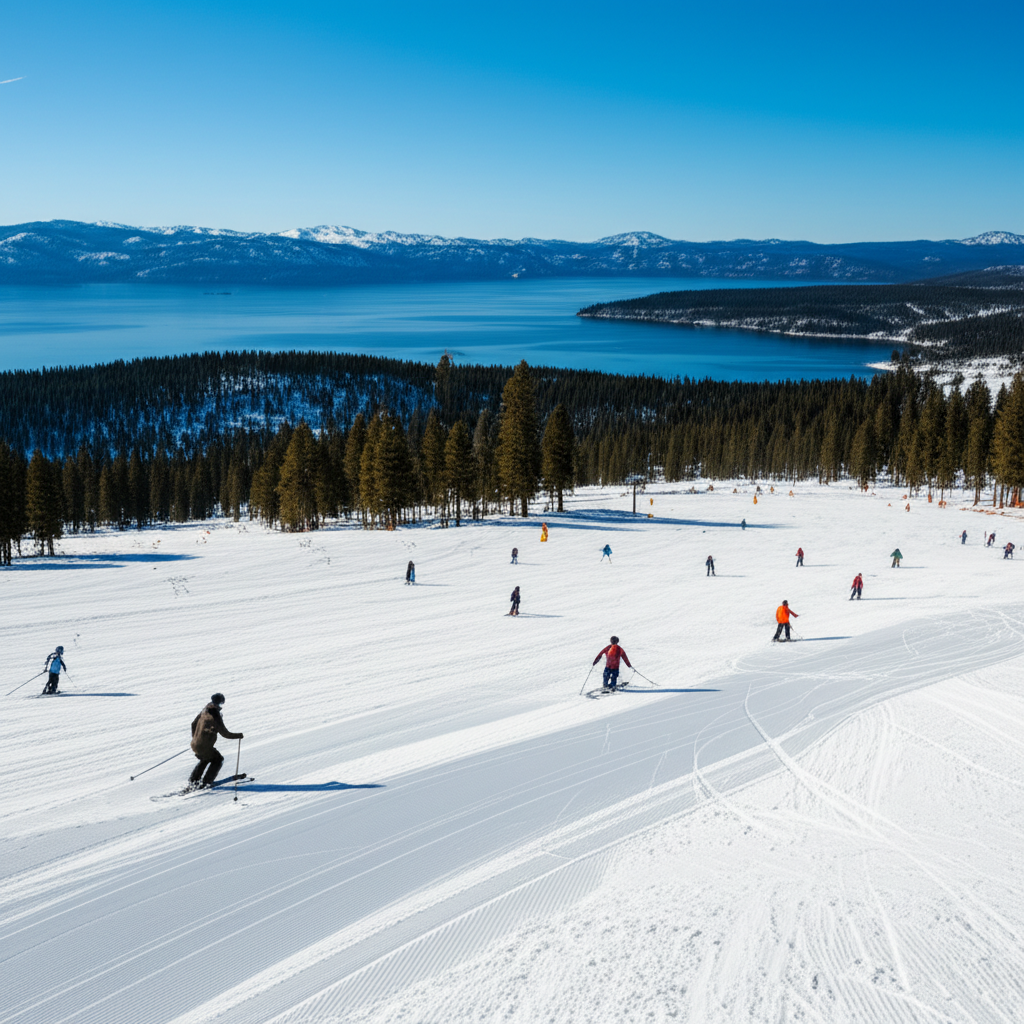
In a groundbreaking development for winter sports enthusiasts, a new AI-powered application has emerged as a game-changer for skiers and snowboarders heading to Lake Tahoe’s iconic resorts. Launched in early January 2026, the app, dubbed SnowSense AI, leverages cutting-edge artificial intelligence to provide real-time updates on snow conditions, helping users make informed decisions about where and when to hit the slopes. With Tahoe’s reputation as a premier skiing destination, this technology promises to enhance the experience for thousands of visitors each season.
nnHow SnowSense AI Works
nSnowSense AI integrates data from multiple sources, including weather satellites, resort-reported snow depths, live webcams, and user-generated reports. Using machine learning algorithms, the app analyzes this data to deliver hyper-localized snow condition forecasts for popular Tahoe resorts such as Heavenly Mountain, Northstar California, and Palisades Tahoe. The app’s AI model not only predicts snowfall and surface conditions but also accounts for factors like wind speed, temperature fluctuations, and grooming schedules.
nAvailable on both iOS and Android platforms, SnowSense AI offers a user-friendly interface with personalized alerts. Users can input their skill level, preferred terrain (e.g., powder, groomed runs, or backcountry), and favorite resorts to receive tailored recommendations. For example, if a fresh powder dump is detected at Heavenly Mountain, intermediate skiers might receive a notification highlighting specific runs suited to their abilities.
nnThe Impact on Tahoe Skiing
nLake Tahoe, straddling the California-Nevada border, attracts over 2 million skiers and snowboarders annually, according to the Tahoe Regional Planning Agency. With 15 major ski resorts and an average annual snowfall of 400 inches, the region is a winter sports paradise. However, conditions can vary dramatically across resorts and even within different elevations of the same mountain. SnowSense AI addresses this variability by providing granular data, down to specific trails and chairlifts.
n“We’ve seen skiers waste time and money traveling to resorts with subpar conditions, or worse, missing out on epic powder days because they didn’t have the right information,” said Emily Carter, CEO of SnowTech Innovations, the company behind SnowSense AI. “Our app uses AI to take the guesswork out of planning a ski day, ensuring users get the best possible experience.”
nnReal-Time Data and Crowdsourcing
nOne of the app’s standout features is its crowdsourcing capability. Skiers can submit real-time reports on snow quality, icy patches, or lift lines, which the AI cross-references with official data to improve accuracy. This community-driven approach has already garnered praise from early adopters in the 2026 ski season. As of January 24, 2026, SnowSense AI reports over 50,000 active users since its launch, with engagement spikes on weekends and during major snowstorms.
nnAI’s Growing Role in Outdoor Recreation
nThe debut of SnowSense AI reflects a broader trend of AI integration in outdoor recreation. Over the past decade, artificial intelligence has transformed industries ranging from fitness tracking to adventure planning. In 2023, for instance, hiking apps began using AI to predict trail conditions based on weather patterns and user feedback. SnowSense AI builds on this foundation, tailoring the technology to the unique challenges of winter sports.
nIndustry analysts predict that AI-driven tools like SnowSense could reshape how skiers interact with resorts. “This app isn’t just about convenience; it’s about optimizing the entire skiing ecosystem,” said Mark Thompson, a technology consultant specializing in outdoor sports. “Resorts could use aggregated data from apps like this to manage crowds, improve safety protocols, and even adjust pricing dynamically based on demand and conditions.”
nnEnvironmental and Safety Benefits
nBeyond enhancing user experience, SnowSense AI has potential environmental and safety benefits. By directing skiers to areas with optimal conditions, the app can reduce unnecessary travel, cutting down on carbon emissions - a critical concern as climate change impacts snowfall patterns in the Sierra Nevada. Additionally, real-time alerts about hazardous conditions, such as avalanches or icy terrain, could help prevent accidents. According to the National Ski Areas Association, over 50 skier fatalities occur annually in the U.S., often due to poor visibility or unexpected hazards. SnowSense AI aims to mitigate these risks with its predictive analytics.
nnChallenges and Future Developments
nDespite its early success, SnowSense AI faces challenges. Data accuracy depends heavily on user participation and resort cooperation, and not all Tahoe resorts have fully integrated their systems with the app as of January 2026. Additionally, privacy concerns arise from the app’s collection of location data and user preferences, though SnowTech Innovations assures users that data is anonymized and encrypted.
nLooking ahead, the company plans to expand SnowSense AI’s reach beyond Tahoe, targeting other major ski regions like Colorado’s Rocky Mountains and Utah’s Wasatch Range by the 2027 season. Features in development include integration with wearable devices to track skier performance and partnerships with resorts for lift ticket discounts tied to app usage.
nnConclusion
nAs the 2026 ski season unfolds, SnowSense AI stands out as a pioneering tool for winter sports enthusiasts. By harnessing the power of artificial intelligence, the app not only enhances the skiing experience at Tahoe resorts but also sets a precedent for how technology can improve safety, sustainability, and enjoyment in outdoor recreation. For skiers eager to carve through the best powder or navigate groomed runs with confidence, SnowSense AI is quickly becoming an indispensable companion on the slopes.