In a stunning development that has sent ripples through the artificial intelligence community, researchers at the AI Innovation Lab at Stanford University unveiled a revolutionary large language model (LLM) named 'ContextNet-3' on March 21, 2026. This next-generation model promises to redefine how machines interpret and generate human language, achieving an unprecedented level of contextual understanding that rivals human cognition. This breakthrough could have far-reaching implications for industries ranging from customer service to content creation and beyond.
What Makes ContextNet-3 a Game-Changer?
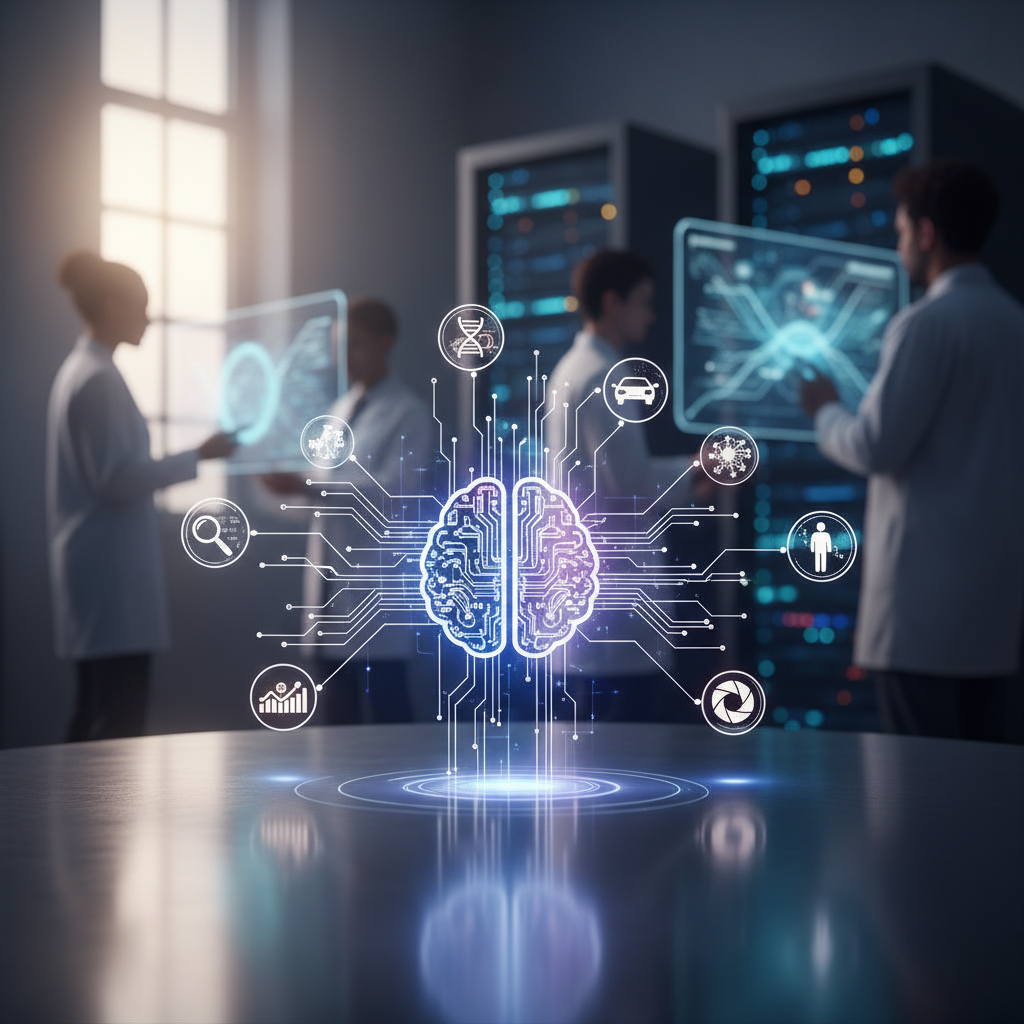
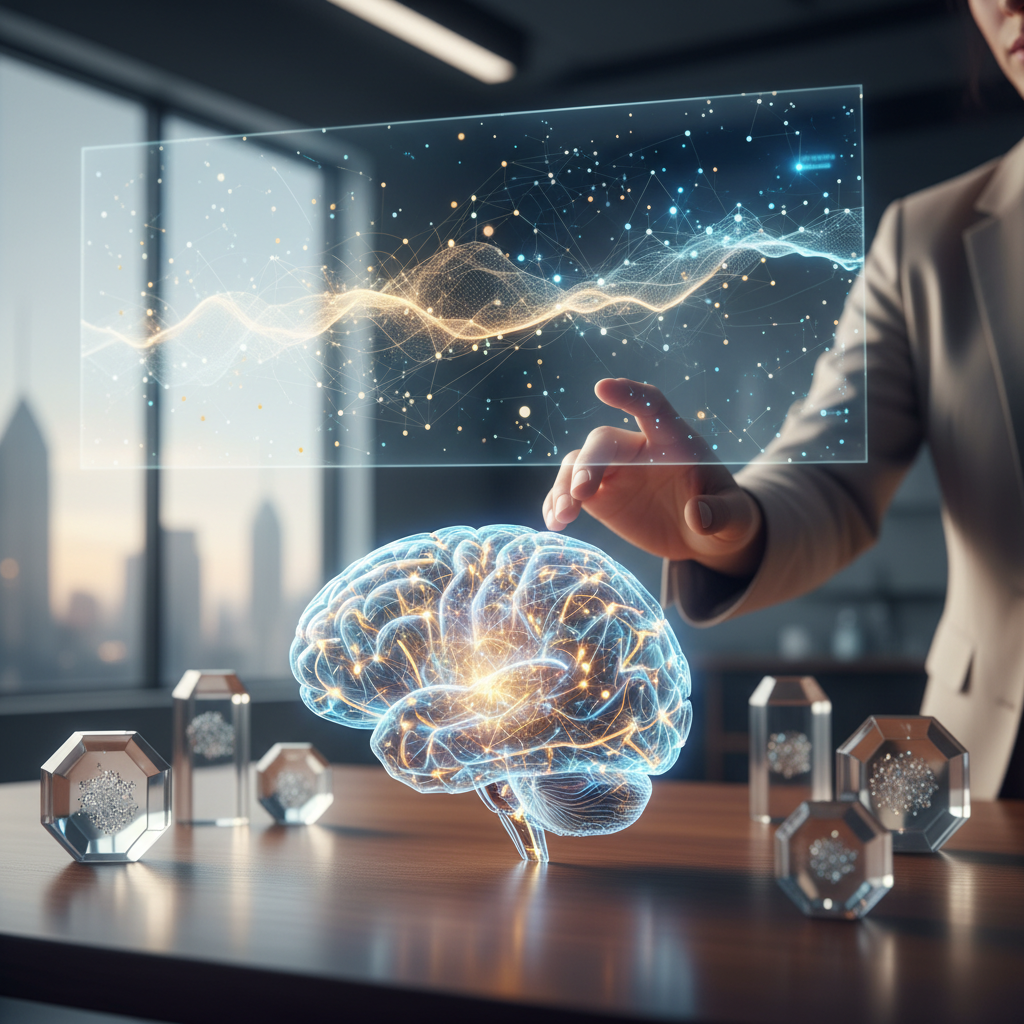
Unlike its predecessors, ContextNet-3 doesn’t merely predict the next word in a sequence based on statistical probabilities. Instead, it employs a novel neural architecture that integrates long-term memory mechanisms with real-time contextual analysis. This allows the model to 'remember' and reference entire conversations or documents, even when processing new inputs, mimicking the way humans draw on past knowledge to inform current discussions.
Dr. Elena Martinez, lead researcher on the project, explained, 'Traditional LLMs often struggle with maintaining coherence over long texts or complex dialogues. ContextNet-3 addresses this by building a dynamic knowledge graph in real-time, enabling it to track nuanced relationships between concepts across vast datasets. It’s a significant step toward true conversational AI.'
Key Features of ContextNet-3
- Enhanced Contextual Memory: The model can retain and recall information from up to 100,000 tokens in a single session, far surpassing the limitations of earlier models.
- Multi-Modal Integration: ContextNet-3 seamlessly integrates text, audio, and visual data, allowing it to respond to inputs like voice commands or image descriptions with uncanny accuracy.
- Ethical Safeguards: Built-in bias detection and mitigation algorithms ensure that the model adheres to ethical guidelines, reducing the risk of harmful or biased outputs.
- Energy Efficiency: Optimized for lower computational costs, it runs on 30% less power than comparable models, addressing growing concerns about the environmental impact of AI training.
Real-World Applications: Transforming Industries
The potential applications of ContextNet-3 are staggering. In customer service, for instance, the model could power chatbots capable of handling intricate, multi-step inquiries without losing track of the conversation’s history. Imagine a virtual assistant that remembers your preferences from a chat three months ago and uses that information to personalize responses today—this is no longer science fiction.
In the realm of content creation, ContextNet-3 could assist writers by generating drafts that maintain consistent tone, style, and thematic coherence across long-form content. For educators, it could provide personalized tutoring, adapting explanations based on a student’s learning history and current comprehension level.
Healthcare is another sector poised for transformation. ContextNet-3’s ability to process and summarize vast amounts of medical literature could support doctors in diagnosing rare conditions by cross-referencing patient symptoms with global research in real-time. 'The implications for precision medicine are enormous,' noted Dr. Martinez. 'We’re already in talks with leading hospitals to pilot this technology.'
The Technical Innovation Behind the Breakthrough
At the heart of ContextNet-3 lies a hybrid neural network architecture that combines transformer models with a new technique called 'Recursive Contextual Mapping' (RCM). Traditional transformers, while powerful, often lose contextual fidelity as input length increases. RCM addresses this by creating layered memory states that update dynamically, ensuring that even distant information remains relevant during processing.
Additionally, the model was trained on a diverse, curated dataset comprising over 10 trillion tokens, including multilingual texts, scientific papers, and anonymized conversational data. This extensive training corpus, coupled with advanced reinforcement learning techniques, allows ContextNet-3 to excel in tasks requiring deep reasoning and cultural nuance.
However, the team at Stanford acknowledges that scaling such a model for widespread use presents challenges. 'Training and deploying models of this complexity require immense resources,' admitted Dr. Martinez. 'Our next goal is to democratize access by developing lightweight versions that can run on consumer-grade hardware.'
Industry Reactions and Future Outlook
The announcement has sparked excitement and cautious optimism across the AI industry. Tech giants like Google and OpenAI are reportedly accelerating their own research into contextual AI, hinting at a new race to dominate the next frontier of language models. Meanwhile, startups specializing in AI ethics are advocating for transparent guidelines to govern the deployment of such powerful tools.
'This is a monumental leap, but it also raises questions about privacy and misuse,' said Priya Kapoor, CEO of EthicalAI Solutions. 'How do we ensure that a model with such deep memory doesn’t inadvertently store sensitive user data? These are conversations we need to have now.'
Looking ahead, the Stanford team plans to open-source parts of ContextNet-3’s framework by late 2026, inviting global collaboration to refine and expand its capabilities. They also aim to integrate the model with emerging technologies like quantum computing to further enhance processing speeds.
Why This Matters for the Future of AI
The unveiling of ContextNet-3 marks a pivotal moment in the evolution of artificial intelligence. As LLMs inch closer to human-like understanding, they blur the line between machine and human interaction, opening up possibilities we once thought were decades away. From smarter virtual assistants to life-saving medical tools, the impact of this technology could be transformative—if wielded responsibly.
For now, the AI community watches with bated breath as ContextNet-3 begins its journey from lab to real-world application. One thing is certain: the future of language models has just taken a giant leap forward, and we’re all along for the ride.