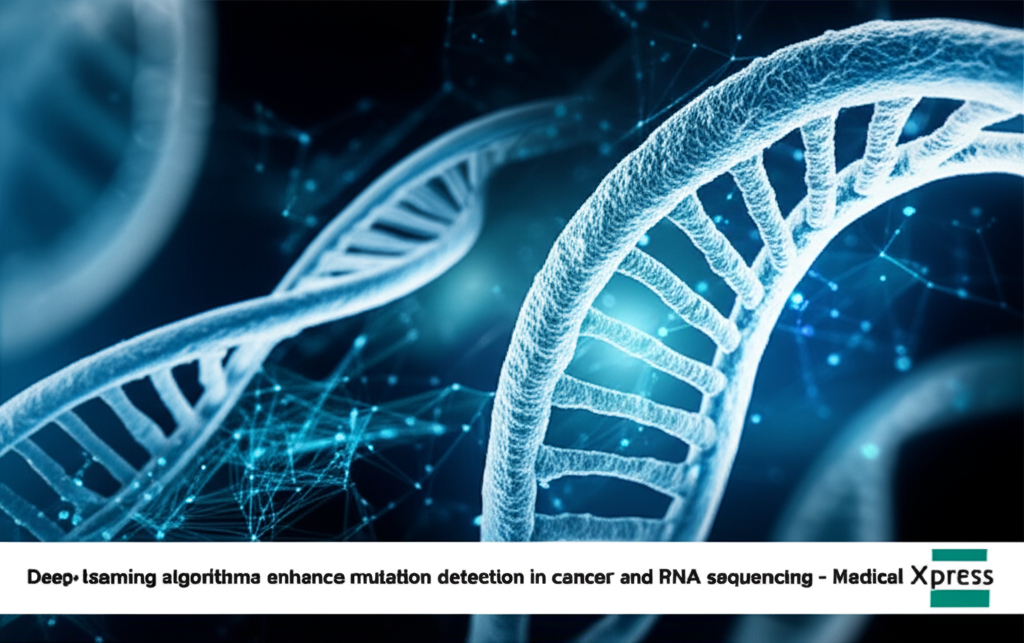
In a groundbreaking stride for precision medicine, deep-learning algorithms are transforming the landscape of cancer mutation detection and RNA sequencing as of January 2026. Leveraging the power of artificial intelligence (AI), researchers and medical professionals are now able to identify genetic mutations with unprecedented accuracy, paving the way for tailored treatments and improved patient outcomes. This development, reported by Medical Xpress, underscores the critical role AI continues to play in modern healthcare.
nnThe Role of Deep-Learning in Cancer Detection
nDeep-learning, a subset of AI that mimics the human brain's neural networks, has shown remarkable potential in analyzing complex biological data. Unlike traditional computational methods, deep-learning algorithms can process vast datasets - such as genomic sequences - and uncover patterns that are often invisible to the human eye. In the context of cancer, this technology is being used to detect mutations in DNA and RNA, which are critical drivers of tumor growth.
nAccording to a recent study highlighted by Medical Xpress, deep-learning models have achieved a detection accuracy rate of over 95% for certain cancer-related mutations. This represents a significant improvement over older methods, which often struggled with false positives and missed subtle genetic alterations. By training on diverse datasets from global cancer research initiatives, these algorithms continuously refine their predictive capabilities.
nnRNA Sequencing: A New Frontier
nRNA sequencing, a technique used to analyze the transcriptome - the complete set of RNA molecules in a cell - has also benefited immensely from AI advancements. RNA sequencing provides insights into gene expression, helping scientists understand how mutations affect cellular behavior in cancer. However, the sheer volume of data generated by RNA sequencing has historically posed challenges for analysis.
nDeep-learning models are now streamlining this process by automating the identification of aberrant RNA patterns linked to cancer. For instance, these algorithms can distinguish between normal and cancerous gene expression profiles with high precision, enabling earlier and more accurate diagnoses. A 2025 report from the National Cancer Institute noted that AI-driven RNA sequencing reduced diagnostic turnaround times by nearly 40%, a trend that continues to accelerate in 2026.
nnImpact on Precision Medicine
nThe integration of deep-learning into mutation detection and RNA sequencing is a cornerstone of precision medicine, an approach that tailors treatments to an individual’s genetic makeup. By identifying specific mutations driving a patient’s cancer, doctors can recommend targeted therapies that are more effective and less toxic than traditional treatments like chemotherapy.
nFor example, in cases of non-small cell lung cancer (NSCLC), deep-learning algorithms have successfully identified mutations in the EGFR gene, which are present in approximately 10-15% of NSCLC patients according to the American Cancer Society. This allows for the use of targeted drugs like tyrosine kinase inhibitors, which have shown to improve survival rates significantly.
nnReal-World Applications in 2026
nAs of early 2026, several leading medical institutions have adopted AI-powered tools for cancer diagnostics. Hospitals and research centers are partnering with AI technology firms to integrate these algorithms into clinical workflows. For instance, platforms that combine deep-learning with genomic sequencing are now being used to provide real-time insights during patient consultations, drastically reducing the time between testing and treatment planning.
nMoreover, cloud-based AI systems are making these technologies accessible to smaller clinics and underserved regions, democratizing access to cutting-edge cancer care. This is particularly significant given that the World Health Organization (WHO) estimates that cancer cases will rise to 29.5 million annually by 2040, highlighting the urgent need for scalable diagnostic solutions.
nnChallenges and Ethical Considerations
nDespite the promise of AI in cancer detection, challenges remain. One key issue is the need for diverse and representative datasets to train deep-learning models. If algorithms are trained predominantly on data from specific populations, they may underperform when applied to others, potentially exacerbating health disparities. Researchers are actively working to address this by curating global genomic databases.
nAdditionally, ethical concerns around data privacy and consent are paramount. Genomic data is highly sensitive, and ensuring that patient information is protected while being used for AI training is a top priority. Regulatory bodies, such as the U.S. Food and Drug Administration (FDA), are developing guidelines to govern the use of AI in medical diagnostics, with updates expected later in 2026.
nnThe Future of AI in Oncology
nLooking ahead, the synergy between deep-learning and cancer research is poised to yield even greater advancements. Experts predict that by the end of the decade, AI could play a central role in not only detecting mutations but also predicting how cancers will evolve over time. This could lead to proactive interventions, stopping cancer progression before it becomes life-threatening.
nFurthermore, the integration of AI with other emerging technologies, such as CRISPR gene editing, holds immense potential. While still in experimental stages as of 2026, combining AI-driven mutation detection with precise gene-editing tools could one day enable doctors to correct cancer-causing mutations at the molecular level.
nnIndustry Collaboration and Investment
nThe rapid progress in this field is fueled by significant investments from both public and private sectors. In 2025 alone, global funding for AI in healthcare surpassed $15 billion, with a substantial portion directed toward oncology applications, according to a report by Statista. Major tech companies and biotech startups are collaborating to bring these innovations to market, ensuring that deep-learning tools are both accurate and user-friendly for medical professionals.
nnAs we move through 2026, the momentum shows no signs of slowing. Conferences like the upcoming AI in Healthcare Summit, scheduled for March 2026, will likely showcase the latest developments in deep-learning for cancer diagnostics, further solidifying AI’s role as a game-changer in medicine.
nnConclusion
nThe emergence of deep-learning algorithms for mutation detection and RNA sequencing marks a pivotal moment in the fight against cancer. With accuracy rates climbing and diagnostic times shrinking, AI is empowering clinicians to deliver more effective, personalized care. While challenges like data diversity and privacy must be addressed, the trajectory is clear: artificial intelligence is not just a tool but a transformative force in oncology. As research and technology continue to evolve in 2026, the promise of better outcomes for millions of cancer patients worldwide grows ever closer.
n