
AI's Maturation: From Experiment to Practical Implementation
The landscape of Artificial Intelligence in mid-2026 demonstrates a clear shift from experimental phases to widespread, practical implementation across diverse sectors. Industries are no longer merely exploring AI's potential but are actively integrating solutions that yield tangible benefits. This evolution is evident in areas ranging from emergency services and healthcare to retail and logistics, underscoring AI's growing role in addressing complex real-world challenges.
This period also marks significant developments in regulatory frameworks, particularly in Europe, where continent-wide rules now mandate AI systems to identify themselves to human interlocutors. Such regulations reflect a growing global emphasis on responsible AI development and deployment, ensuring transparency and accountability as AI becomes more pervasive in daily life.
The rapid pace of change in AI, Big Data, and analytics continues to reshape industries, with companies increasingly focusing on solutions that offer immediate and practical advantages. This trend is supported by ongoing research and advancements, including discussions at forums like Uncertainty in Artificial Intelligence (UAI) 2026, which continue to push the boundaries of AI capabilities and understanding.
Enhancing Emergency Response with AI: The ALERTCalifornia Network
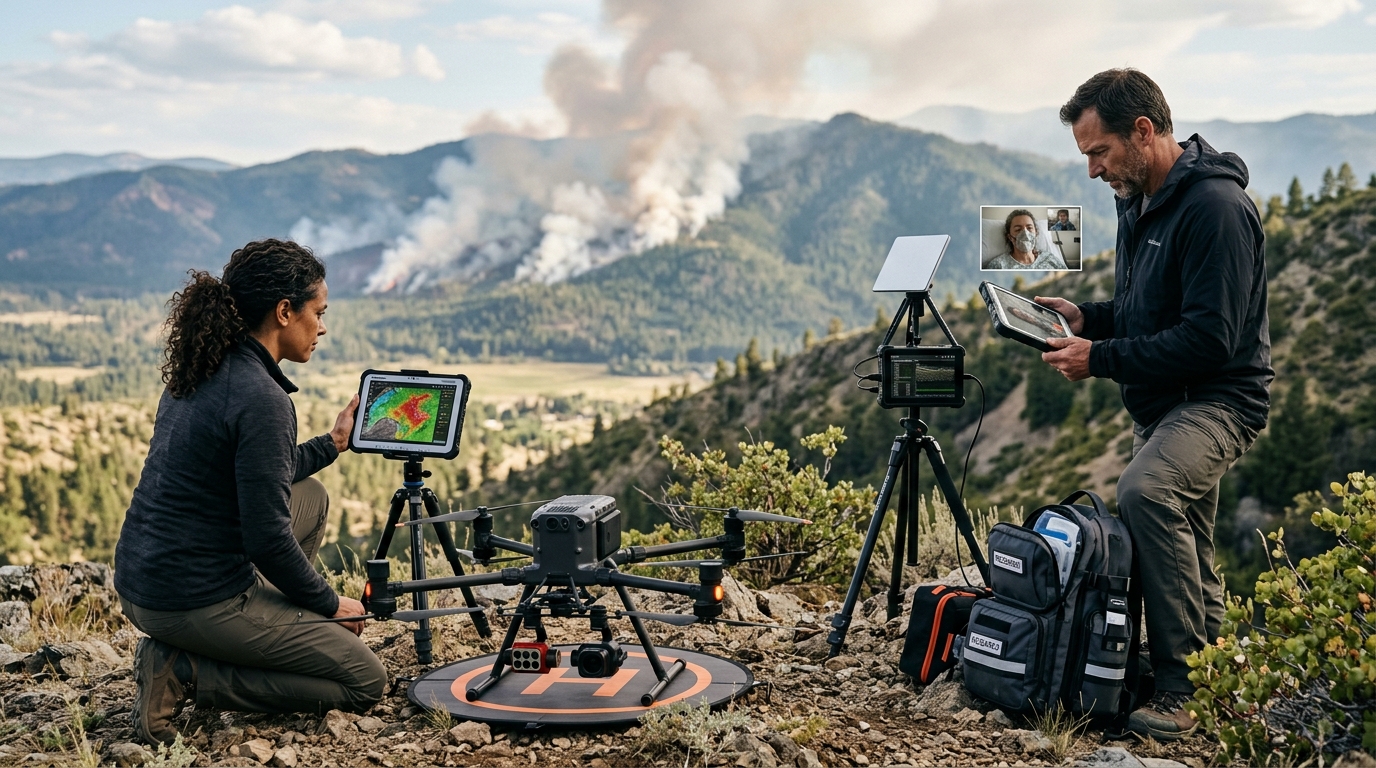
One of the most compelling examples of AI's practical application in mid-2026 is its role in emergency response, particularly in wildfire management. The University of California San Diego's research highlights AI's contribution to this critical area through its ALERTCalifornia network. This extensive network comprises over 1,200 natural-hazard monitoring cameras, strategically deployed to provide real-time data.
AI systems integrated into ALERTCalifornia play a crucial role in processing the vast amounts of visual data collected by these cameras. Specifically, AI assists emergency teams in several key ways:
- Smoke Identification: AI algorithms are trained to detect early signs of smoke, often before human observers can, enabling faster initial response times.
- Fire Spread Modeling: By analyzing environmental data, terrain, and current fire conditions, AI models can predict fire spread patterns with increased accuracy. This predictive capability is vital for strategic resource allocation and evacuation planning.
- Situational Awareness: The continuous monitoring and AI-driven analysis provide emergency personnel with enhanced situational awareness, allowing for more informed decision-making during rapidly evolving incidents.
The effectiveness of such systems underscores a critical lesson for AI deployment: the most impactful use cases often involve connecting AI models to real-world signals and integrating them with a responsible human response. This synergy ensures that AI acts as a powerful tool to augment human capabilities rather than replace them, especially in high-stakes scenarios.
AI in Healthcare: Precision and Planning
Beyond emergency services, AI is making significant strides in healthcare, offering solutions that promise greater precision and efficiency in patient care. Research examples from the University of California San Diego illustrate several key areas where AI is being applied:
Heart Monitoring and Diagnostics
AI algorithms are being developed to analyze physiological data from various monitoring devices, enabling earlier detection of anomalies and potential cardiac issues. This can lead to more timely interventions and improved patient outcomes. The ability of AI to process continuous streams of data and identify subtle patterns that might be missed by human observation is particularly valuable in preventative care and chronic disease management.
Breast Cancer Treatment Planning
In oncology, AI is being utilized to optimize treatment planning for diseases like breast cancer. This involves analyzing patient-specific data, including medical history, imaging results, and genetic information, to recommend personalized treatment protocols. AI can help clinicians evaluate various treatment options, predict their efficacy, and minimize side effects, thereby enhancing the precision and effectiveness of therapy.
Robotic-Arm Control in Surgery
The integration of AI with robotic systems is revolutionizing surgical procedures. AI-powered robotic arms offer enhanced precision and dexterity, assisting surgeons in complex operations. AI algorithms can learn from surgical data, refine movements, and even provide real-time guidance, potentially reducing invasiveness, improving recovery times, and expanding the scope of minimally invasive surgery.
These healthcare applications demonstrate AI's potential to transform patient care by providing tools that enhance diagnostic accuracy, personalize treatment, and improve surgical outcomes. The focus remains on developing AI solutions that are reliable, interpretable, and seamlessly integrate into existing clinical workflows.
Broader AI Advancements and Market Trends in Mid-2026
The first week of August 2026 alone highlighted the rapid evolution of AI, Big Data, and analytics across industries. Companies are increasingly moving past experimental phases, implementing AI solutions that offer practical benefits and drive tangible value. This trend is not confined to a single sector but is observed across retail, logistics, and various other business domains.
Market trends in AI indicate a strong focus on AI business strategy, AI market trends, and AI mergers & acquisitions. This activity reflects a maturing market where companies are strategically positioning themselves to leverage AI for competitive advantage. Investment in AI infrastructure and hardware continues to be a priority, recognizing that robust foundational technology is essential for scaling AI applications.
Beyond specific applications, the broader field of AI research continues to explore new frontiers. Topics like futuristic robots with artificial intelligence and advanced computer models of human intelligence remain areas of active investigation. These research efforts, often discussed at conferences like UAI 2026, contribute to the foundational knowledge that will drive future practical AI innovations.
The responsible development and deployment of AI remain a central theme. The European Union's continent-wide rules requiring AI systems to identify themselves to humans they interact with, effective on August 2, 2026, exemplify a proactive approach to AI governance. This regulatory step aims to foster trust and transparency, ensuring that as AI becomes more integrated into society, its interactions are clear and understandable to users.
In summary, mid-2026 is a period characterized by AI's transition from theoretical exploration to practical, impactful deployment. From safeguarding communities against wildfires to revolutionizing healthcare and shaping business strategies, AI is demonstrating its capacity to deliver real-world benefits, all while navigating an evolving landscape of ethical considerations and regulatory frameworks.