
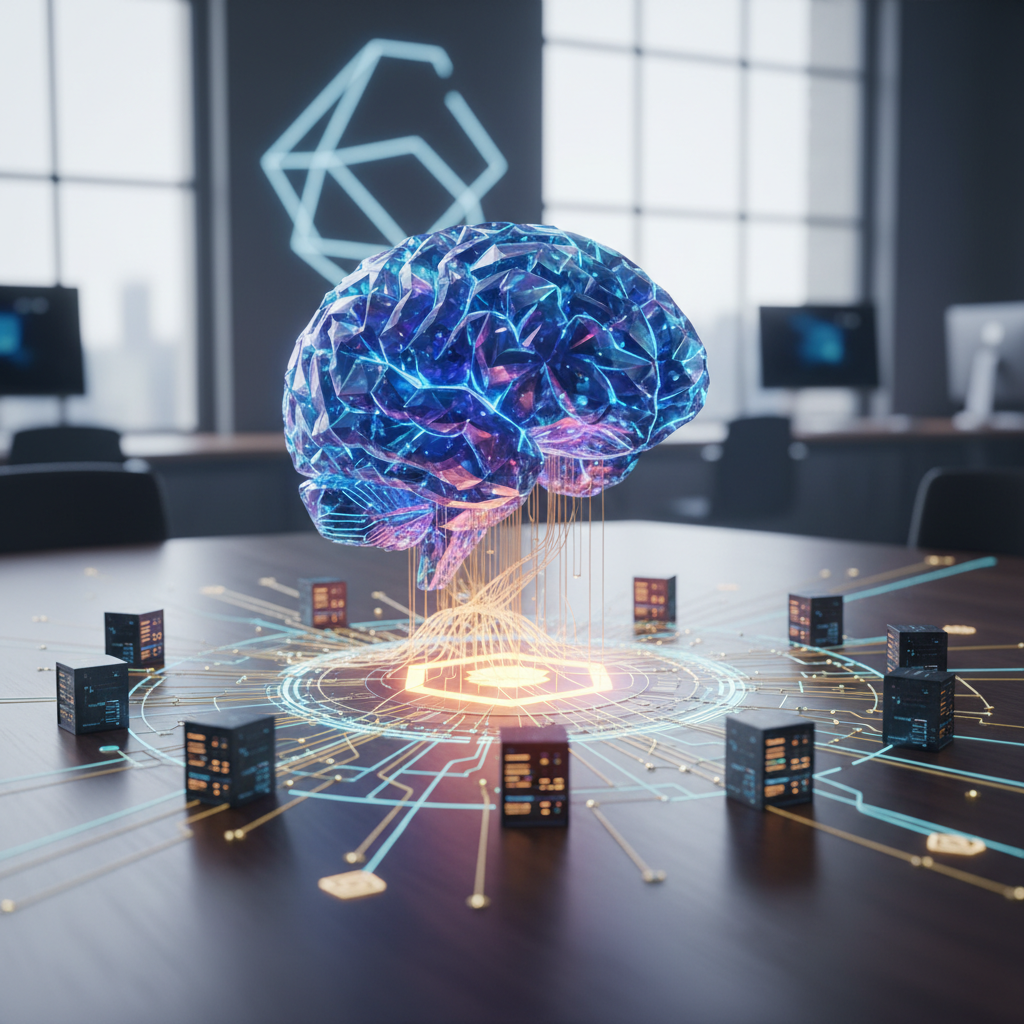
In a groundbreaking development for the intersection of blockchain and artificial intelligence, a new AI model leveraging the high-speed Solana blockchain has been unveiled. Announced on April 3, 2026, this innovative project promises to revolutionize decentralized machine learning (ML) by enabling faster, more secure, and scalable AI computations. As the AI industry continues to explore ways to democratize access to powerful models, Solana's integration into machine learning frameworks marks a significant milestone.
Why Solana for AI and Machine Learning?
Solana, known for its lightning-fast transaction speeds and low costs, has emerged as a preferred blockchain for developers looking to build decentralized applications (dApps). Its high throughput—capable of processing up to 65,000 transactions per second—makes it an ideal backbone for AI systems that require real-time data processing and model training. Unlike traditional centralized cloud platforms, Solana offers a decentralized infrastructure that reduces reliance on single points of failure, enhancing both security and accessibility for AI developers.
The new AI model, dubbed 'SolAI-Compute,' harnesses Solana's capabilities to distribute machine learning workloads across a global network of nodes. This approach not only accelerates training times for complex neural networks but also allows smaller organizations and independent developers to contribute to and benefit from cutting-edge AI research without needing access to expensive hardware.
Decentralized Machine Learning: A Game-Changer
Decentralized machine learning is an emerging field that aims to break down the barriers of traditional AI development, where large corporations with vast computational resources dominate. By integrating with Solana, SolAI-Compute enables a peer-to-peer network where participants can share computational power, datasets, and even trained models in a secure, transparent manner.
This system operates on a tokenized incentive structure built into the Solana blockchain. Contributors who offer their computing resources or data are rewarded with tokens, creating a self-sustaining ecosystem. This democratizes AI development, allowing anyone with a decent internet connection and hardware to participate in training large-scale models like language models (LLMs) or deep neural networks.
Moreover, the decentralized nature of SolAI-Compute addresses critical concerns about data privacy. Instead of storing sensitive data in centralized servers—where it could be vulnerable to breaches—data remains fragmented across the network, encrypted via Solana's robust protocols. This ensures compliance with global data protection regulations while still fueling AI innovation.
Technical Innovations Behind SolAI-Compute
At the core of SolAI-Compute is a novel approach to distributed training of neural networks. Traditional distributed ML systems often suffer from latency issues due to slow communication between nodes. Solana's architecture mitigates this by leveraging its Proof of History (PoH) consensus mechanism, which timestamps transactions to ensure near-instantaneous synchronization across the network.
The model also incorporates federated learning techniques, allowing local devices to train smaller subsets of data without sharing raw information. These localized updates are then aggregated on the Solana blockchain to refine the global AI model, preserving user privacy while maintaining high accuracy. Initial tests of SolAI-Compute have shown promising results, with training times for large-scale LLMs reduced by up to 40% compared to conventional cloud-based systems.
Additionally, smart contracts on Solana automate the allocation of computational tasks and rewards, ensuring fairness and transparency. This eliminates the need for intermediaries, further reducing costs for developers and end-users alike.
Potential Applications and Industry Impact
The implications of SolAI-Compute extend across multiple sectors. Here are just a few potential use cases:
- Healthcare: Decentralized AI models could enable collaborative research on medical data without compromising patient privacy, accelerating breakthroughs in diagnostics and personalized treatments.
- Finance: Real-time fraud detection and risk assessment models can be trained on distributed datasets, improving security for decentralized finance (DeFi) platforms.
- Education: Independent educators and institutions in under-resourced areas can access powerful AI tools for personalized learning, thanks to the low-cost infrastructure of Solana.
- Gaming: AI-driven non-player characters (NPCs) and procedural content generation can be developed collaboratively, enhancing immersive experiences in blockchain-based games.
The broader AI industry stands to benefit from this paradigm shift as well. By lowering the barriers to entry, SolAI-Compute could foster a new wave of innovation, with startups and individual developers experimenting with novel algorithms and applications. Analysts predict that decentralized AI platforms built on blockchains like Solana could capture a significant share of the ML market by the end of the decade.
Challenges and Future Outlook
Despite its promise, the integration of Solana with AI is not without challenges. Scalability remains a concern as the network grows, especially if millions of nodes begin participating in AI computations. Additionally, ensuring the quality and integrity of shared datasets in a decentralized environment will require robust verification mechanisms to prevent malicious actors from skewing results.
Energy consumption is another point of discussion. While Solana is more energy-efficient than some other blockchains, the computational demands of training AI models could still pose environmental concerns. Developers behind SolAI-Compute are reportedly exploring ways to integrate renewable energy sources into the network to mitigate this issue.
Looking ahead, the team plans to release an open-source toolkit later in 2026, allowing developers to build custom AI applications on top of Solana. Partnerships with major AI research organizations are also in the works, signaling strong industry support for this pioneering approach.
In conclusion, the launch of SolAI-Compute marks a pivotal moment for both AI and blockchain technology. By harnessing the power of Solana, this new model offers a glimpse into a future where machine learning is truly decentralized, accessible, and secure. As the project evolves, it could redefine how we approach AI development, making it a collaborative, community-driven endeavor rather than a privilege of the few.