
Introduction to a Game-Changing AI Innovation
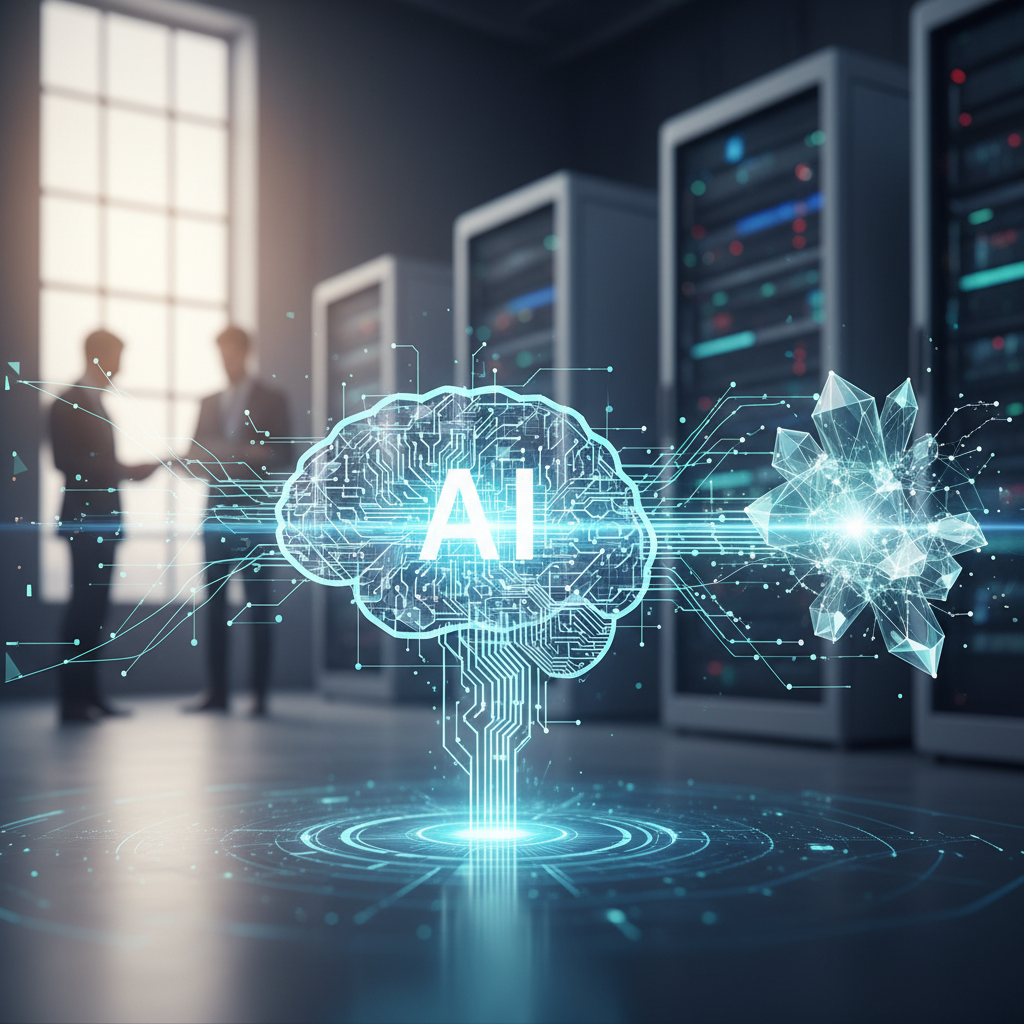
In a groundbreaking development for the artificial intelligence (AI) and machine learning (ML) communities, researchers have unveiled a novel AI-powered quantum computing framework that promises to revolutionize the speed and efficiency of machine learning models. Announced on April 18, 2026, this cutting-edge technology integrates quantum computing principles with advanced AI algorithms, opening new frontiers for data processing and model training. This article dives into the details of this innovation, its potential applications, and what it means for the future of AI technology.
What Is the AI-Powered Quantum Computing Framework?
The newly introduced framework, dubbed 'QuantumML-X', combines the computational power of quantum systems with AI-driven optimization techniques. Unlike traditional computing methods that process data in binary form (0s and 1s), quantum computing leverages quantum bits or 'qubits' to perform complex calculations at unprecedented speeds. By integrating AI algorithms into this quantum environment, QuantumML-X can dynamically optimize machine learning workflows, reducing training times for large-scale models from days to mere hours.
Developed by a collaborative team of AI researchers and quantum physicists from leading tech institutions, this framework addresses one of the most significant bottlenecks in machine learning: computational latency. Traditional ML models, especially deep neural networks, often require extensive resources and time to process massive datasets. QuantumML-X tackles this issue by exploiting quantum entanglement and superposition to execute parallel computations, while AI algorithms fine-tune the process for maximum efficiency.
Key Features of QuantumML-X
- Ultra-Fast Model Training: By harnessing quantum computing, QuantumML-X can train complex neural networks up to 100 times faster than classical systems.
- Energy Efficiency: The framework minimizes energy consumption by optimizing quantum circuits, making it a sustainable choice for large-scale AI deployments.
- Scalability: QuantumML-X is designed to scale seamlessly, accommodating everything from small research projects to enterprise-level AI applications.
- Enhanced Accuracy: AI-driven optimization ensures that quantum computations are tailored to specific ML tasks, improving prediction accuracy and reducing errors.
Potential Applications in AI and Machine Learning
The implications of QuantumML-X are vast, with potential applications spanning multiple industries. In healthcare, for instance, this framework could accelerate the development of AI models for drug discovery by simulating molecular interactions at a quantum level. This could drastically reduce the time required to identify promising compounds, potentially saving millions of lives through faster medical breakthroughs.
In the financial sector, QuantumML-X could enhance risk analysis and fraud detection systems. By processing massive datasets in real-time, AI models trained on this framework can identify patterns and anomalies with unparalleled precision, helping institutions mitigate risks and improve decision-making.
Additionally, the framework shows promise in natural language processing (NLP), a field dominated by large language models (LLMs). Training LLMs often requires immense computational resources, but QuantumML-X could slash training times while maintaining or even improving model performance. This could democratize access to advanced NLP tools, enabling smaller organizations to compete with tech giants.
Challenges and Future Outlook
While QuantumML-X marks a significant leap forward, it is not without challenges. Quantum computing hardware is still in its nascent stages, with issues like error rates and qubit stability posing obstacles to widespread adoption. Moreover, integrating AI with quantum systems requires specialized expertise, which may limit accessibility in the short term.
However, researchers are optimistic about the future. Ongoing advancements in quantum hardware and error correction techniques are expected to address current limitations, making frameworks like QuantumML-X more viable for commercial use. Additionally, the team behind QuantumML-X plans to release an open-source version of the framework later in 2026, encouraging collaboration and innovation within the AI and quantum computing communities.
Industry experts predict that the convergence of AI and quantum computing will define the next decade of technological progress. As one lead researcher noted, 'QuantumML-X is just the beginning. We’re on the cusp of a paradigm shift where AI doesn’t just solve problems—it redefines what’s possible.'
Why This Matters for the AI Industry
The introduction of QuantumML-X underscores the rapid evolution of AI technology and its intersection with other cutting-edge fields like quantum computing. For businesses and developers, this framework offers a glimpse into a future where computational constraints are no longer a barrier to innovation. It also highlights the importance of interdisciplinary research, as breakthroughs in AI increasingly rely on insights from physics, mathematics, and engineering.
As the AI industry continues to grow, staying ahead of the curve will require embracing transformative technologies like QuantumML-X. Whether you’re a data scientist, a business leader, or an AI enthusiast, this development signals exciting opportunities on the horizon. The fusion of AI and quantum computing could unlock solutions to some of the world’s most pressing challenges, from climate modeling to personalized medicine.
Conclusion
The unveiling of QuantumML-X on April 18, 2026, marks a pivotal moment in the journey of artificial intelligence and machine learning. By merging the raw power of quantum computing with the adaptability of AI, this framework has the potential to redefine how we approach complex problems. While hurdles remain, the promise of faster, more efficient, and accurate machine learning models is an enticing prospect for the future. Stay tuned as we continue to track the progress of QuantumML-X and its impact on the AI landscape.