
In a significant leap forward for artificial intelligence, researchers unveiled a groundbreaking transfer learning technique on March 13, 2026, that promises to revolutionize cross-domain AI applications. This innovative approach, developed by a collaborative team of data scientists and machine learning experts at the Global AI Research Institute (GARI), addresses one of the long-standing challenges in AI: the ability to apply knowledge learned in one domain to entirely different, unrelated domains with minimal retraining.
What Is Transfer Learning, and Why Does It Matter?
Transfer learning is a machine learning methodology where a model trained on one task or dataset is reused or fine-tuned for a different but related task. Historically, this technique has been pivotal in areas like computer vision and natural language processing (NLP), where pre-trained models like BERT or ResNet are adapted for specific use cases. However, traditional transfer learning often struggles when the source and target domains are vastly different—think applying a model trained on medical imaging to financial forecasting.
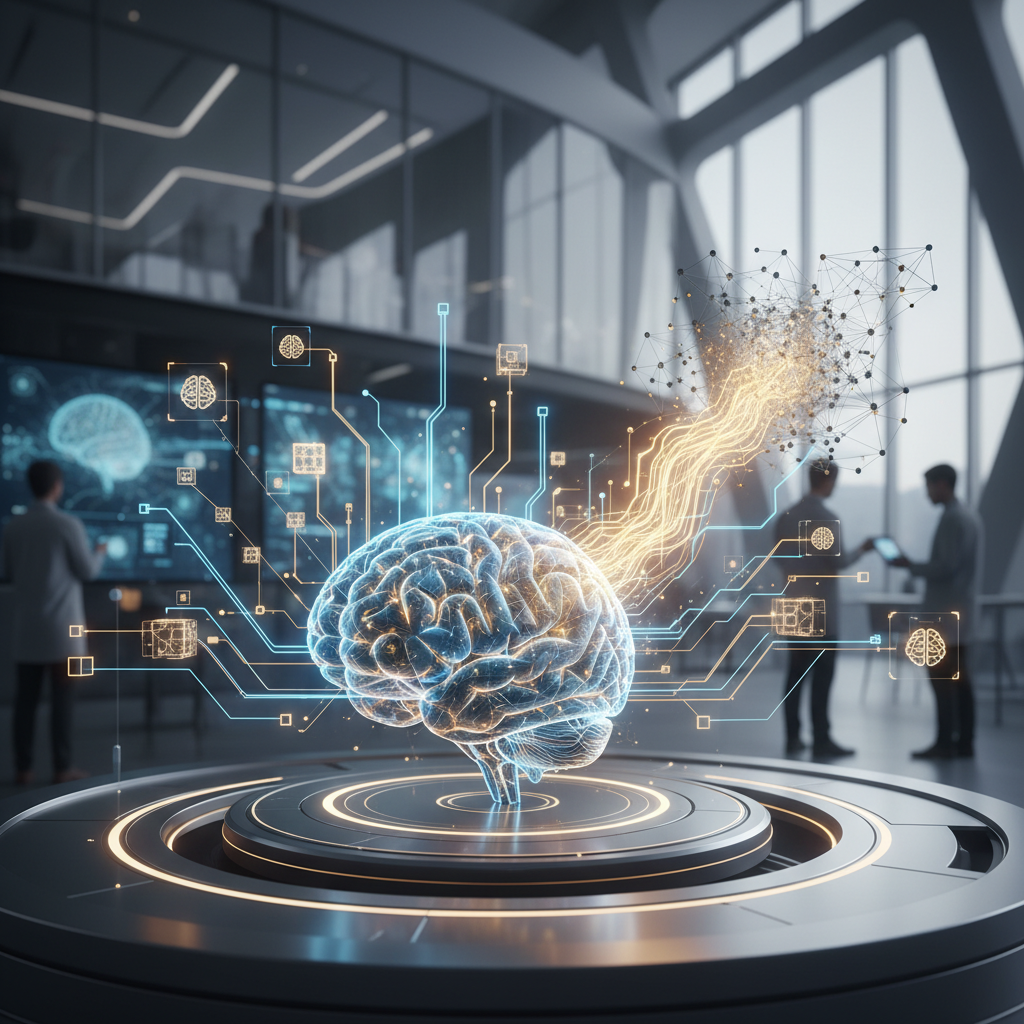
The new technique, dubbed 'Cross-Domain Adaptive Transfer (CDAT),' breaks through these barriers by leveraging a novel neural architecture that dynamically maps feature spaces across unrelated domains. This advancement could dramatically reduce the time, data, and computational resources required to deploy AI solutions in diverse industries, from healthcare to logistics to entertainment.
How CDAT Redefines Transfer Learning
At the core of CDAT is a multi-layered mapping mechanism that identifies and aligns abstract patterns between disparate datasets. Unlike conventional methods that rely on shared low-level features, CDAT focuses on high-level conceptual similarities, allowing a model trained on, say, speech recognition to contribute to tasks like predicting stock market trends.
Dr. Elena Marquez, lead researcher at GARI, explained, 'CDAT essentially teaches AI to think more abstractly, much like humans do when we apply lessons from one area of life to another. It’s a step closer to general intelligence, where adaptability isn’t limited by data silos.'
The technique also incorporates a self-regulating feedback loop that continuously refines the mapping process during deployment. This means the model gets better over time without requiring extensive manual intervention or retraining—a boon for real-world applications where data evolves rapidly.
Real-World Implications of CDAT
The potential applications of CDAT are vast and transformative. Here are just a few areas where this breakthrough could make an immediate impact:
- Healthcare: Models trained on vast datasets of medical images could be adapted to predict patient outcomes or optimize hospital resource allocation, even with limited domain-specific data.
- Finance: AI systems initially developed for fraud detection could be repurposed to analyze market sentiment or forecast economic trends by transferring learned behavioral patterns.
- Manufacturing: Robotics systems trained in one factory setting could quickly adapt to entirely new production environments, slashing downtime and setup costs.
- Creative Industries: Generative models used for creating art or music could transfer their understanding of aesthetics to design virtual reality experiences or game environments.
By reducing the dependency on domain-specific datasets, CDAT also democratizes AI development, enabling smaller organizations with limited resources to leverage powerful pre-trained models for their unique needs.
Challenges and Ethical Considerations
While the unveiling of CDAT has sparked excitement across the AI community, it’s not without challenges. One concern is the risk of unintended bias transfer. If a source model contains biases—whether from skewed data or flawed training processes—these could inadvertently propagate to the target domain, potentially amplifying harmful outcomes.
Additionally, the black-box nature of the mapping mechanism raises questions about explainability. As AI systems become more abstract in their reasoning, ensuring transparency and accountability remains a critical hurdle. Dr. Marquez and her team are already working on integrating explainable AI (XAI) principles into CDAT to address these concerns.
Ethically, the ability to repurpose models across domains also necessitates robust governance frameworks. Who owns the intellectual property of a model’s transferred knowledge? How do we safeguard sensitive data when a model trained in one sector is applied to another? These are questions the AI industry must tackle as CDAT and similar technologies gain traction.
The Future of AI with Cross-Domain Transfer Learning
The introduction of CDAT marks a pivotal moment in the journey toward more flexible, adaptable AI systems. Industry analysts predict that cross-domain transfer learning could become a cornerstone of AI development by the end of the decade, potentially accelerating innovation cycles and fostering interdisciplinary collaboration.
Tech giants and startups alike are already expressing interest in licensing or contributing to the CDAT framework. Open-source initiatives are also in the works, with GARI planning to release a scaled-down version of the technique for public experimentation later this year.
As we stand on the cusp of this new era in machine learning, one thing is clear: techniques like CDAT are pushing the boundaries of what AI can achieve, bringing us closer to systems that not only learn but truly adapt across the spectrum of human endeavor. Stay tuned to our blog for more updates on this exciting development and other cutting-edge advancements in artificial intelligence.