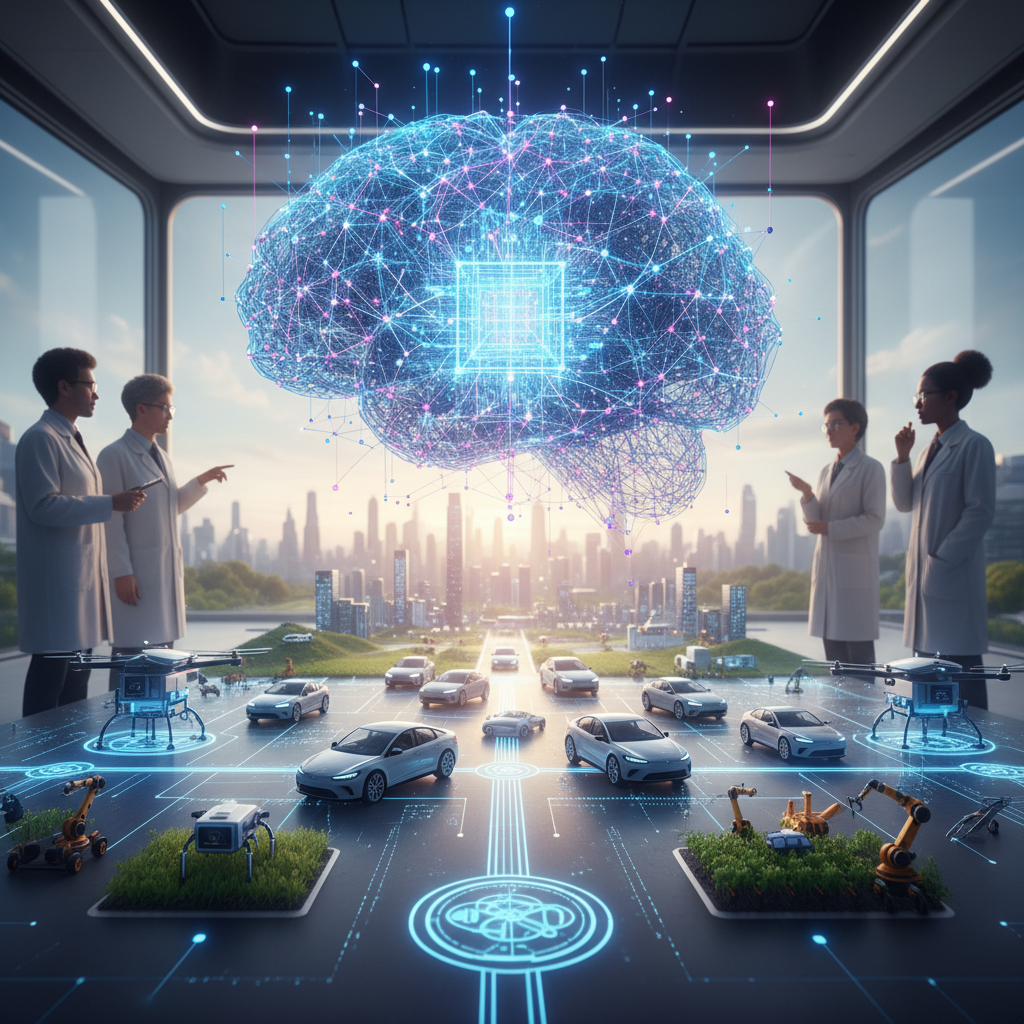
In a groundbreaking development for the field of artificial intelligence, researchers at the Global AI Innovation Institute (GAII) announced a major breakthrough in self-supervised learning on March 13, 2026. This new approach, dubbed 'AutoLearn-SS,' promises to redefine how autonomous systems, such as self-driving cars and robotic assistants, adapt to complex, unpredictable environments without relying on vast amounts of labeled data.
What is Self-Supervised Learning, and Why Does It Matter?
Self-supervised learning (SSL) is a subset of machine learning where models learn to understand and interpret data by generating their own supervisory signals, rather than depending on human-labeled datasets. Traditional supervised learning requires enormous quantities of annotated data—think millions of labeled images for a facial recognition system—which is both time-consuming and costly to produce. SSL, on the other hand, leverages unlabeled data, making it a more scalable and efficient solution for training AI models.
The significance of SSL cannot be overstated, especially in the context of autonomous systems. These systems, which include everything from drones to industrial robots, often operate in dynamic environments where pre-labeled data may not capture every possible scenario. The ability to learn 'on the fly' from raw, unlabeled inputs could be a game-changer for industries ranging from transportation to manufacturing.
The AutoLearn-SS Breakthrough: Key Innovations
The AutoLearn-SS framework introduces several key innovations that set it apart from previous self-supervised learning models. According to Dr. Elena Marquez, lead researcher at GAII, the system combines advanced contrastive learning techniques with a novel dynamic memory mechanism. This allows the AI to not only recognize patterns in real-time data but also retain and refine its understanding of rare or anomalous events over time.
- Enhanced Contrastive Learning: AutoLearn-SS uses a refined version of contrastive learning to better distinguish between similar and dissimilar data points, improving its ability to generalize across diverse scenarios.
- Dynamic Memory Mechanism: Unlike static models, this framework continuously updates a memory bank of learned representations, enabling it to adapt to evolving environments without catastrophic forgetting—a common issue in lifelong learning.
- Reduced Computational Overhead: The model is optimized for edge devices, meaning it can run efficiently on hardware with limited processing power, a critical feature for real-world autonomous applications.
Dr. Marquez emphasized that these innovations could reduce training times by up to 40% compared to existing SSL methods while achieving higher accuracy in tasks like object detection and path prediction.
Real-World Implications for Autonomous Systems
The potential applications of AutoLearn-SS are vast, particularly for autonomous systems that must operate with minimal human intervention. Self-driving cars, for instance, could use this technology to better navigate unexpected road conditions—think sudden weather changes or unmarked obstacles—by learning from raw sensor data in real time. Similarly, delivery drones could improve their ability to avoid hazards and optimize routes without needing constant updates from a central server.
Beyond transportation, industries like healthcare could also benefit. Surgical robots equipped with AutoLearn-SS might adapt to unique patient anatomies during procedures by learning from live imaging data, potentially improving precision and outcomes. In manufacturing, robots on assembly lines could detect and correct for equipment malfunctions autonomously, reducing downtime and enhancing safety.
Challenges and Ethical Considerations
While the breakthrough is exciting, it’s not without challenges. One concern is the interpretability of self-supervised models. Since these systems generate their own learning signals, it can be difficult to understand how they arrive at specific decisions—a critical issue for high-stakes applications like autonomous driving. GAII researchers are already working on complementary tools to improve model transparency and ensure accountability.
Additionally, there are ethical questions surrounding the deployment of increasingly autonomous AI systems. If a self-learning robot makes an error in a real-world setting, who is held responsible? As SSL technology advances, policymakers and industry leaders will need to collaborate on frameworks to address liability, safety, and privacy concerns.
The Future of Self-Supervised Learning in AI
The unveiling of AutoLearn-SS marks a significant step forward in the quest for truly autonomous AI. Industry analysts predict that self-supervised learning could become a cornerstone of next-generation AI systems, especially as the demand for scalable, adaptable models continues to grow. With companies like Tesla, Amazon, and Google already investing heavily in SSL research, we can expect rapid advancements and real-world implementations in the coming years.
For now, the GAII team plans to open-source key components of AutoLearn-SS to encourage collaboration and accelerate innovation. They are also partnering with automotive and robotics companies for pilot programs, with initial results expected by late 2026. If successful, this could usher in an era where AI systems learn and evolve much like humans do—through experience rather than explicit instruction.
As we stand on the cusp of this AI revolution, one thing is clear: self-supervised learning is no longer a niche concept but a critical tool for unlocking the full potential of autonomous systems. Stay tuned to our blog for more updates on this transformative technology and its impact on the future of artificial intelligence.