
After the 2026 World Economic Forum (WEF) in Davos, Switzerland, it's clear that Artificial Intelligence (AI) has moved from buzzword to central focus for global leaders. Forbes recently reported that AI dominated the post-Davos agenda, influencing policy, business strategies, and international partnerships. With the forum wrapping up just last week, attendees from government, industry, and academia outlined plans for AI that will likely shape the next decade.
The AI Imperative at Davos 2026
This year’s WEF meeting, held January 19-23, saw over 2,500 leaders convening to tackle urgent issues. According to Forbes, AI featured in more than 60% of official sessions - a steep rise from 40% in 2025. This uptick reflects AI’s expanding reach, with applications spanning healthcare, energy, and education. Participants discussed both the potential for rapid innovation and the need for strong oversight given AI’s risks.
Forbes’ coverage emphasized the urgency behind developing international AI governance frameworks. With AI systems now controlling critical infrastructure in 78% of developed countries (per a 2025 McKinsey report), leaders pushed for harmonized regulations to avoid inconsistent policies that could hamper progress or deepen social divides.
Economic Impacts and Investment Trends
One standout from Davos 2026, as highlighted by Forbes, is the projected economic impact of AI. The International Monetary Fund (IMF) released new estimates during the forum: AI could add up to $15.7 trillion to the global economy by 2030, a 14% jump in global GDP. But the IMF also cautioned about job displacement, predicting that 40% of current positions may be automated or significantly changed by AI within five years.
Investment in AI is accelerating. Forbes noted global AI funding reached $120 billion in 2025 - a 25% increase from the previous year. At Davos, major tech companies and governments announced plans to ramp up funding, with a strong focus on ethical AI development and expanding access in lower-income nations. One major initiative, the Global AI Equity Fund, is a $10 billion partnership between the European Union and private sector firms to support AI adoption in underserved areas.
Policy and Regulation: A Global Balancing Act
Harmonizing Standards
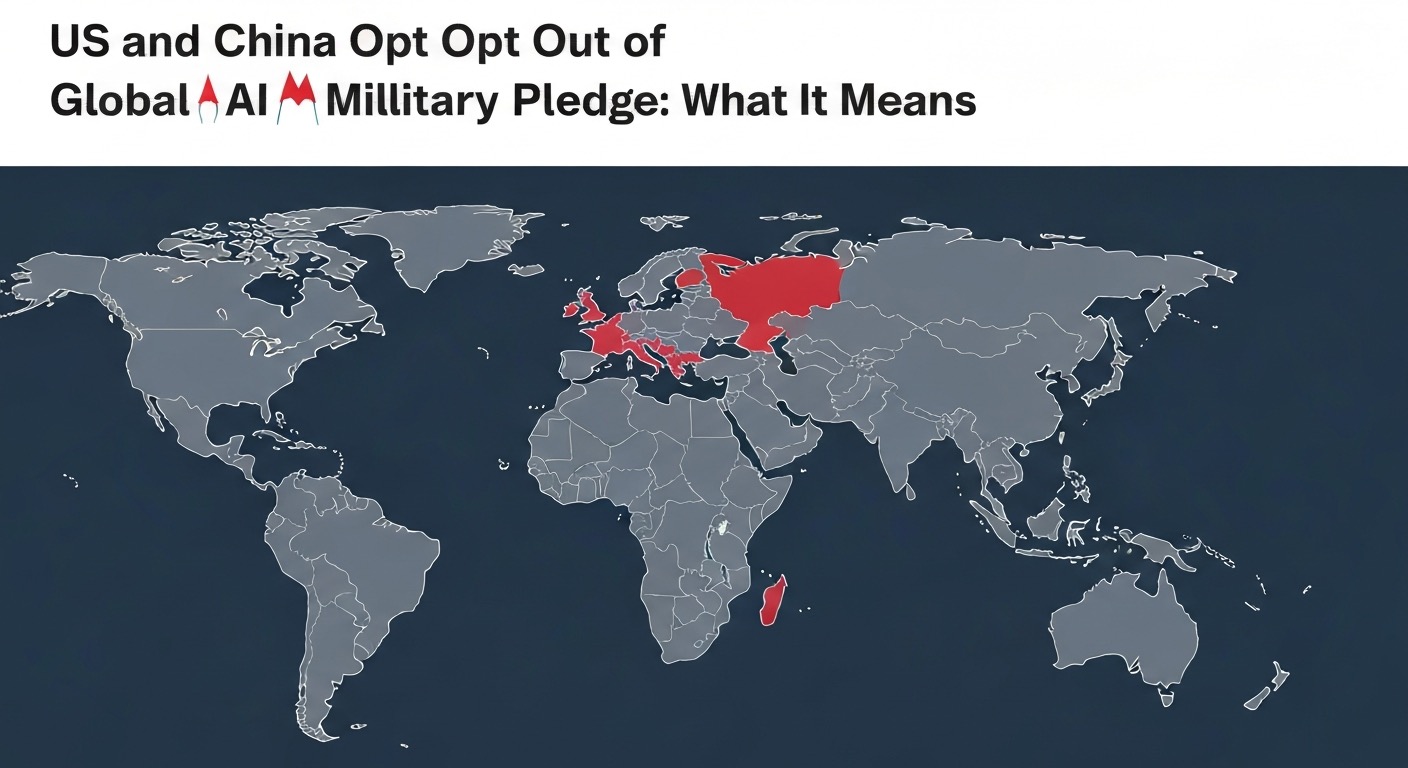
Regulation was a major theme at Davos, according to Forbes. The European Union’s AI Act, first introduced in 2024 and fully implemented in 2025, was often cited as a model for balancing innovation with accountability. However, approaches vary: the United States is moving toward a more decentralized system, while China continues to push state-led AI initiatives. Forum attendees called for a joint framework by 2028 to address concerns such as data privacy, algorithmic bias, and military applications of AI.
Ethical AI as a Priority
Ethics received considerable attention. Forbes reported that over 80% of Davos participants favored mandatory transparency in AI systems, reflecting public worries about hidden algorithms. A 2025 Pew Research survey found that 62% of people globally are uneasy with AI making decisions in sensitive areas like healthcare and criminal justice. This highlights the need for measures that build public trust and clarify how AI decisions are made.
Industry-Specific AI Applications
Forbes’ post-Davos analysis offered specifics on how AI is reshaping key industries. In healthcare, AI-powered diagnostics are now 30% more accurate than traditional methods, according to a 2026 World Health Organization report referenced at the forum. In climate technology, AI models are improving renewable energy grids, with projections of a 20% drop in global carbon emissions by 2030 if these systems are widely implemented.
The financial sector was also a focus. AI-driven fraud detection is estimated to save $50 billion annually, based on a 2025 Deloitte study. However, Forbes cautioned about new risks, such as AI-enabled market manipulation - a concern raised by central bank leaders at Davos.
Challenges Ahead: Inequality and Workforce Disruption
Despite the optimism surrounding AI’s potential at Davos, Forbes discussed several challenges. Economic inequality remains an issue, with AI advancements largely benefiting wealthier nations. A 2026 United Nations report presented at WEF found that only 15% of AI patents are held by companies or researchers in developing countries, illustrating a significant technology gap.
Workforce disruption is another concern. Forbes cited a WEF survey showing that 65% of global CEOs plan to retrain employees for AI integration by 2028. However, small and medium enterprises (SMEs) employ 70% of the global workforce and often lack the resources to adopt AI technologies. This could widen inequality unless targeted support is provided.
The Road Forward: Collaboration and Innovation
Forbes ended its post-Davos coverage with a call for ongoing collaboration. The WEF introduced the AI Global Accord, which was signed by 50 countries and 200 corporations to promote ethical AI development and share technical advances. While the accord is non-binding, it signals widespread recognition of AI’s power and the need for inclusive progress.
Looking ahead to the rest of 2026, AI remains a top priority for both policymakers and business leaders. The decisions made post-Davos will affect how AI shapes economies, societies, and industries. AiSourceNews.com will continue to report on these shifts and their implications.
2026 Update
Many of the initiatives discussed at Davos, such as the AI Global Accord and the Global AI Equity Fund, are still in their early stages. Readers interested in AI policy and investment should check for updates on regulatory frameworks and funding commitments as countries and companies translate these agreements into action.